AI Competitive Intelligence: How Enterprises Monitor Competitors in Real-Time and Win Markets
By Delos Intelligence — 2026-08-01
Discover how AI-powered competitive intelligence helps enterprises monitor competitors in real-time, detect market shifts early, and respond 100x faster than manual methods.
In today's hyper-competitive markets, the difference between winning and losing often comes down to speed. Traditional competitive intelligence relies on manual research, quarterly reports, and industry newsletters, creating a lag of weeks or months. AI-powered competitive intelligence closes this gap.
The Problem with Traditional Competitive Intelligence
Traditional competitive intelligence has critical weaknesses:
- Latency: By the time a quarterly report is published, the competitive landscape has already shifted
- Coverage limitations: Human analysts can monitor only 10-20 competitors effectively
- Signal-to-noise ratio: Analysts spend 80% of time collecting data and only 20% analyzing it
- Reactive posture: Traditional intelligence tells you what competitors have already done, not what they are about to do
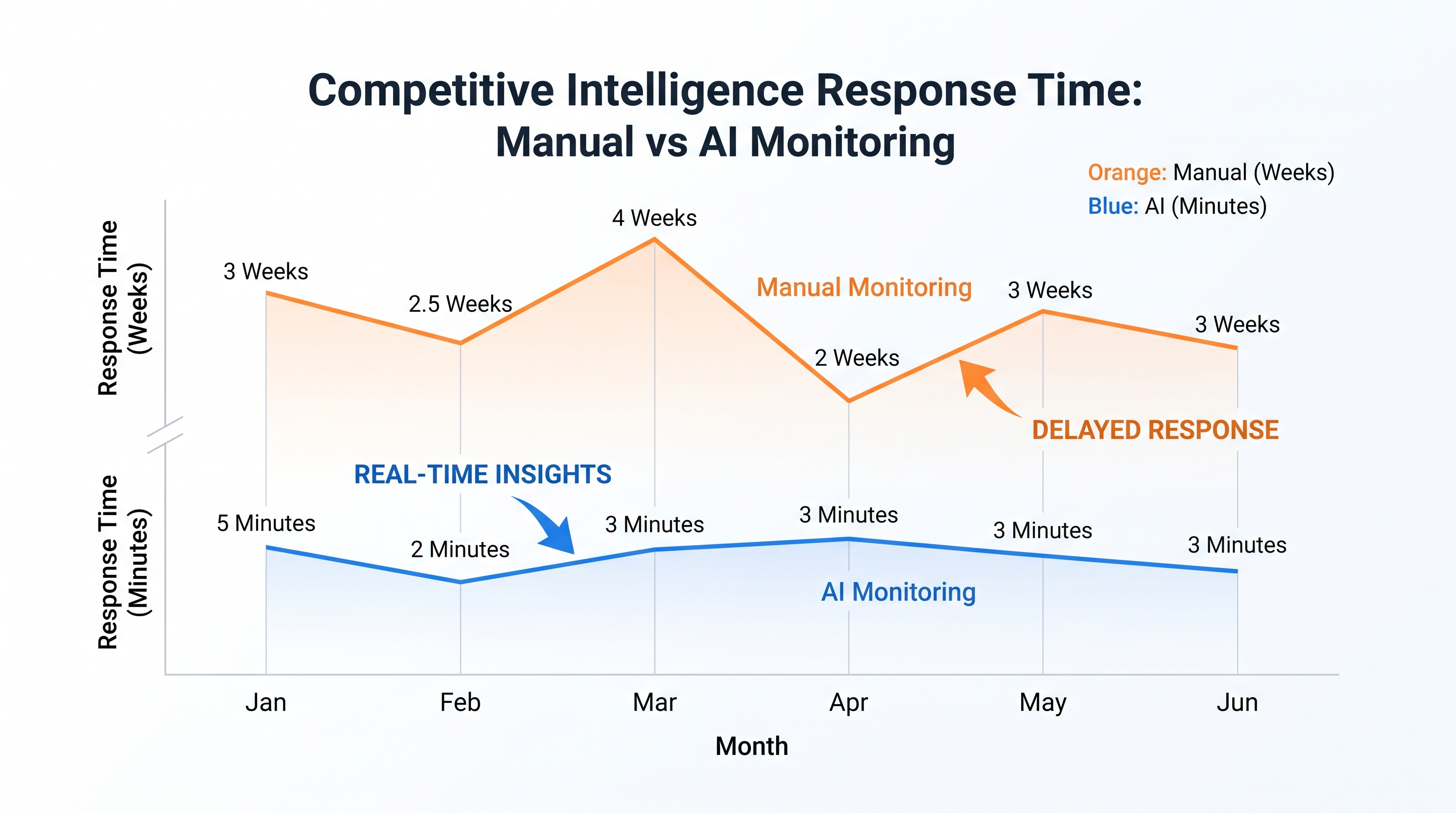
A McKinsey study found that enterprises with slower competitive response times lose 3-5% market share annually to more agile competitors.
!Competitive Intelligence Response Time: Manual vs AI
How AI Transforms Competitive Intelligence
AI systems continuously monitor and analyze data from diverse sources:
Competitor Website Monitoring: AI tracks competitor websites for product changes, pricing updates, feature additions, and messaging shifts — detected within minutes.
Market Signal Analysis: Monitors job postings, patent filings, regulatory submissions, and supply chain data to detect early indicators of strategic moves.
Social and News Monitoring: Analyzes social media, news feeds, and industry forums for competitor mentions, sentiment shifts, and emerging narratives.
Financial and Market Data: Tracks stock prices, earnings calls, analyst reports, and market data to detect financial signals indicating strategic shifts.
Customer Feedback Analysis: Monitors reviews, forums, and social media for customer complaints about competitors, identifying weaknesses to exploit.
!AI Competitive Intelligence Pipeline
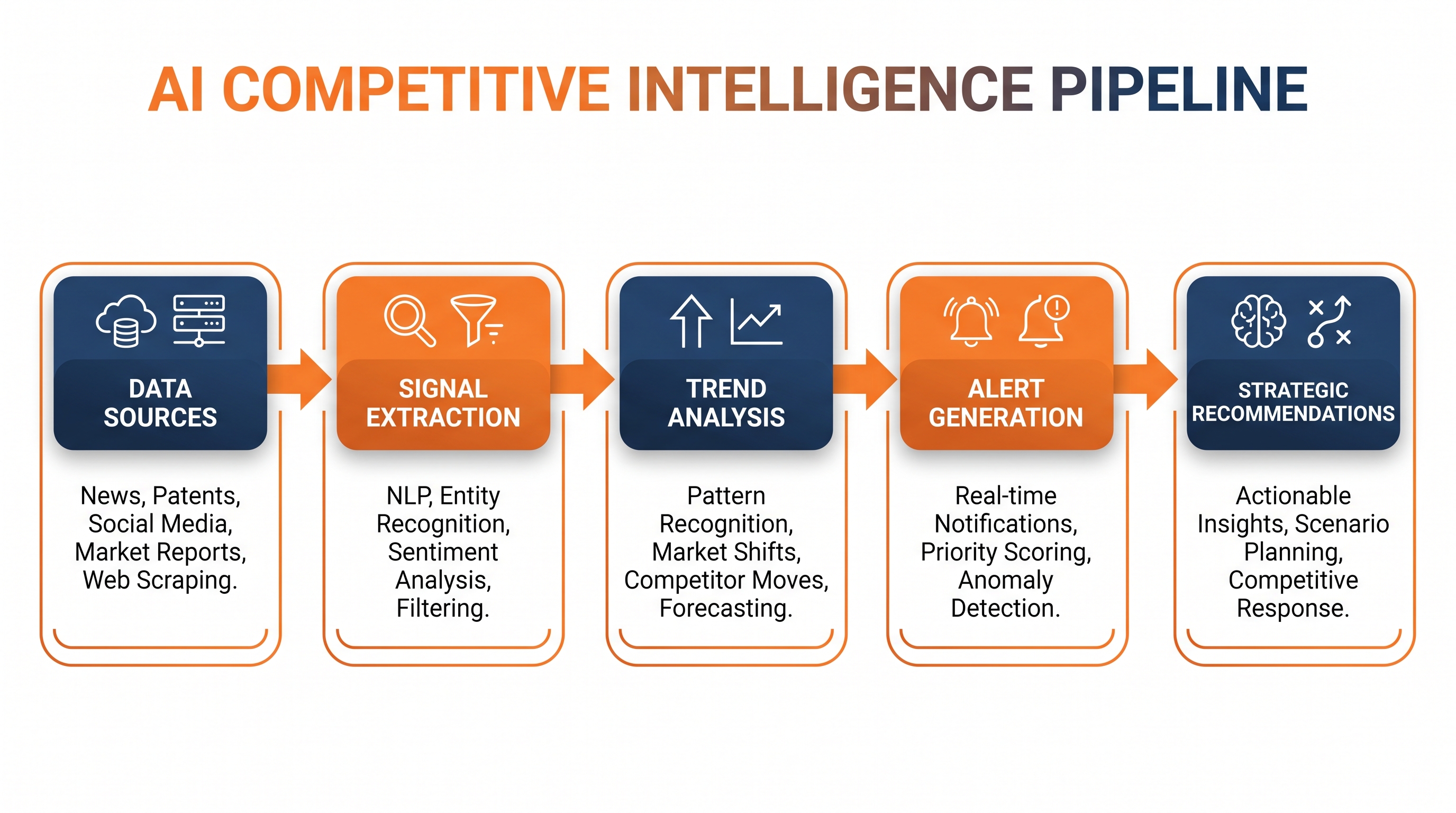
The AI Competitive Intelligence Pipeline
1. Data Sources: Ingests data from competitor websites, news feeds, social media, job boards, patent databases, financial filings, and market research.
2. Signal Extraction: NLP and computer vision models extract structured signals from unstructured data.
3. Trend Analysis: ML models analyze signals over time to identify patterns and trends.
4. Alert Generation: When significant changes are detected, alerts with context and analysis are generated.
5. Strategic Recommendations: The system recommends specific responses, not just reports.
Real-World Applications
SaaS Pricing Wars: A SaaS company monitored 50 competitors' pricing pages in real-time. When a major competitor launched a discount campaign, the system detected it within 15 minutes and recommended targeted retention offers, retaining 92% of at-risk accounts.
Product Launch Detection: A consumer electronics company monitored patent filings and job postings to predict competitor product launches 3-6 months in advance, reducing the competitor's launch impact by 40%.
Market Positioning Shifts: A financial services firm detected a competitor's shift to younger demographics early, launching its own campaign and capturing market share.
Measuring the ROI
Enterprises implementing AI competitive intelligence report:
- 100x faster detection: From weeks to minutes
- 40% improvement in win rates: Sales teams close more deals with real-time competitive intelligence
- 25% reduction in customer churn: Early detection of competitor targeting enables proactive retention
- 15% increase in market share: Faster response to market shifts
- 60% reduction in analyst time: Automation frees analysts for strategic work
Getting Started
Define your competitive universe: Identify the 20-50 competitors you need to monitor.
Identify key signals: Determine which signals matter most: pricing changes, product launches, hiring patterns, or customer sentiment.
Choose the right data sources: For B2B SaaS, competitor websites and job boards are most valuable. For consumer products, social media and review sites are critical.
Integrate with decision-making: Competitive intelligence is only valuable if it drives action.
As markets continue to accelerate, the enterprises that can detect and respond to competitive moves fastest will win.