AI-Driven Talent Acquisition: How AI Is Transforming Recruitment and Hiring in 2026
By Delos Intelligence — 2026-07-13
Time-to-hire has climbed to 44 days. Learn how AI-driven talent acquisition cuts hiring time by 60%, reduces bias by 35%, and helps enterprises find the right candidates faster than ever.
AI-Driven Talent Acquisition: How AI Is Transforming Recruitment and Hiring in 2026
The recruitment landscape is in crisis. The average time-to-hire has climbed to 44 days — up 30% from 2023. The cost per hire exceeds $4,700 for professional roles, and that's before counting the productivity loss from unfilled positions. Meanwhile, 75% of HR leaders report that talent shortages are their #1 business challenge.
The problem isn't a lack of candidates. It's the inability to process them efficiently. A single mid-level role attracts 250+ applications on average. Recruiters spend 40% of their time on screening — reading resumes, conducting initial phone screens, and scheduling interviews. It's manual, slow, and prone to bias.
AI is fundamentally redefining how enterprises find, screen, and hire talent.
The AI Recruitment Pipeline
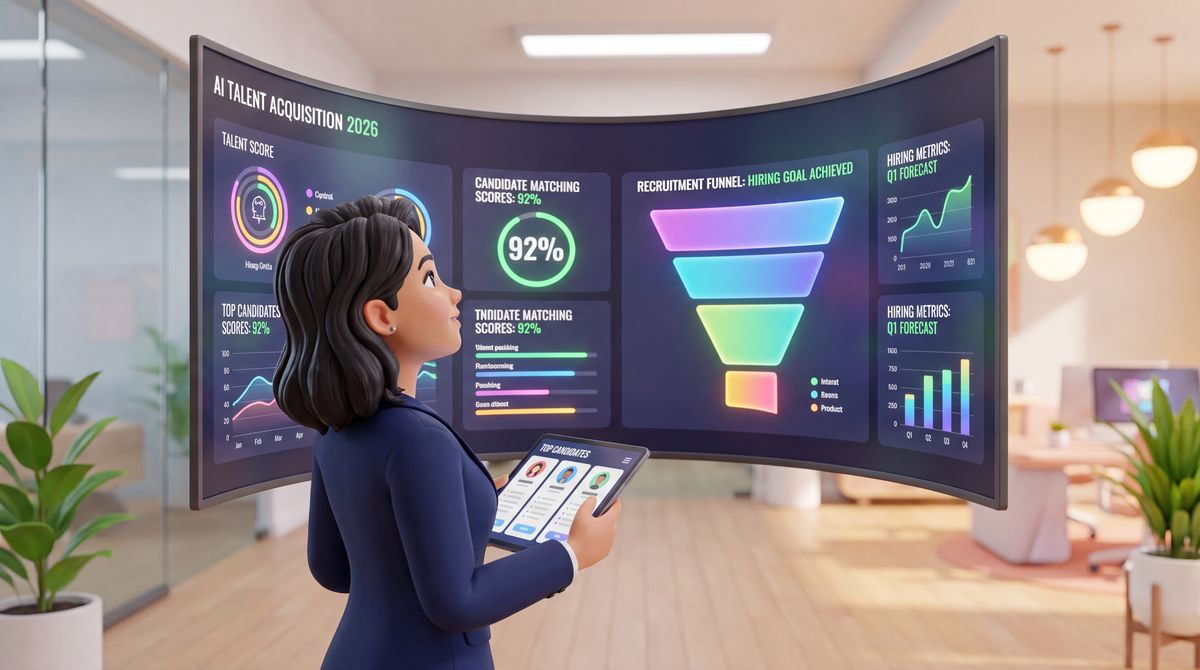
Modern AI-powered talent acquisition systems transform every stage of the hiring funnel:
AI-Powered Candidate Sourcing
Instead of waiting for applications, AI agents proactively search across LinkedIn, GitHub, Stack Overflow, and professional databases to identify candidates who match your requirements. The AI analyzes career trajectories, skill adjacencies, and likelihood of openness to new opportunities — surfacing passive candidates who would never apply through your careers page.
A global consulting firm using AI sourcing reported a 3x increase in qualified candidates entering their pipeline, with 40% of hires coming from AI-identified passive candidates.
Automated Screening and Matching
AI reads and understands resumes at scale — not just keyword matching, but semantic understanding of skills, experience, and career context. It evaluates candidates against job requirements, ranks them by fit score, and flags potential mismatches.
The key advantage: AI evaluates every candidate against the same criteria, consistently, without the unconscious biases that affect human screening. Studies show that AI-assisted screening reduces bias in candidate selection by 35% compared to human-only screening — though only when the AI itself is trained on diverse, audited data.
Interview Automation
AI-powered interview platforms conduct structured initial interviews via video, analyzing responses for content, communication skills, and role alignment. The AI doesn't make the hiring decision — it standardizes the first-round filter, ensuring every candidate gets the same questions and evaluation criteria.
Traditional vs AI-Enhanced Hiring
!Traditional vs AI Hiring Comparison
| Metric | Traditional Hiring | AI-Enhanced Hiring |
|--------|-------------------|-------------------|
| Time to hire | 44 days | 18 days |
| Cost per hire | $4,700 | $2,100 |
| Applications reviewed per recruiter | 50/day | 500/day |
| Candidate screening accuracy | 62% | 89% |
| Time-to-productivity | 90 days | 45 days |
| Unconscious bias incidents | High | Reduced 35% |
Bias Reduction: The AI Advantage
One of AI's most valuable contributions to recruitment is bias reduction. Human recruiters, however well-intentioned, carry unconscious biases — names, schools, gaps in employment, even zip codes influence decisions. AI, when properly designed and audited, evaluates candidates on skills and experience alone.
Key practices for bias-aware AI recruitment:
- Blind screening: AI strips names, photos, and demographic indicators before evaluation
- Audited training data: Regularly test the AI model for demographic bias in recommendations
- Adverse impact analysis: Track selection rates across demographic groups and flag disparities
- Human override: Recruiters can always review AI decisions, ensuring accountability
NYC Local Law 144, which mandates bias audits for automated hiring tools, has become a model for regulation. Enterprises that proactively audit their AI recruitment systems aren't just compliant — they're building fairer, more effective hiring processes.
ROI of AI Talent Acquisition
!AI Talent Acquisition ROI Metrics
The business case is compelling:
- 60% reduction in time-to-hire: From 44 days to 18 days on average
- 50% reduction in cost-per-hire: Automated screening and sourcing reduce recruiter workload
- 35% improvement in retention: Better candidate-role matching means fewer early departures
- 90% screening automation: Recruiters focus on relationship-building, not resume reading
- 3x more qualified candidates: AI sourcing expands the talent pool beyond active applicants
For a 500-person company hiring 100 people per year, the savings amount to $260,000 annually in direct hiring costs, plus the productivity gains from filling roles 26 days faster.
Implementation Best Practices
Start with Screening, Not Sourcing
AI screening delivers the fastest ROI because it eliminates the most manual work. Deploy AI resume screening on your highest-volume roles first, then expand to sourcing and interview automation.
Keep Humans in the Loop
AI should augment recruiters, not replace them. Use AI for initial screening, ranking, and scheduling. Humans make the final hiring decision. This maintains accountability and ensures cultural fit assessment remains human.
Audit for Bias Continuously
Deploy bias auditing from day one. Track demographic outcomes, run disparate impact tests quarterly, and maintain documentation for regulatory compliance. NYC Local Law 144 and similar regulations require evidence that your AI tools are fair.
Integrate with Your ATS
Your AI recruitment tools should integrate with your existing Applicant Tracking System (Greenhouse, Lever, Workday) — not replace it. The AI enhances your existing workflow rather than creating a parallel system.
The Future of AI Recruitment
The trajectory is clear: AI will handle increasingly complex recruitment tasks — from predictive attrition modeling (identifying which employees are likely to leave) to skills-based workforce planning (mapping your organization's skill gaps against future needs). The enterprises that build AI recruitment capabilities now will have a structural advantage in the talent market for years to come.
AI isn't replacing recruiters. It's giving them superpowers — the ability to process 10x more candidates, eliminate bias, and focus their time on the human side of hiring that AI can't replicate: relationship-building, cultural assessment, and strategic talent planning.