AI-Powered Third-Party Risk Management: How CISOs Automate Vendor Security Reviews
By Delos Intelligence — 2026-08-21
Discover how AI-powered TPRM automates vendor security reviews and slashes third-party breaches by 60%.
The Third-Party Risk Explosion
The modern enterprise relies on hundreds of vendors. The average Fortune 500 company onboards 183 new vendors per year, each introducing cybersecurity exposure, data privacy liability, and regulatory risk. Despite this scale, 65% of security teams still rely on manually completed questionnaires and annual PDF audits.
The Four Structural Failures of Legacy TPRM
1. Questionnaire Paralysis: SIG, CAIQ, VSAQ questionnaires consume 40-80 hours per vendor annually.
2. Point-in-Time Snapshots: Annual reviews leave 11 months of blind exposure.
3. Scope Limitation to Tier 1: Most programs cover fewer than 15% of vendors.
4. Disconnected Risk and Procurement: Security findings rarely influence contract negotiations.
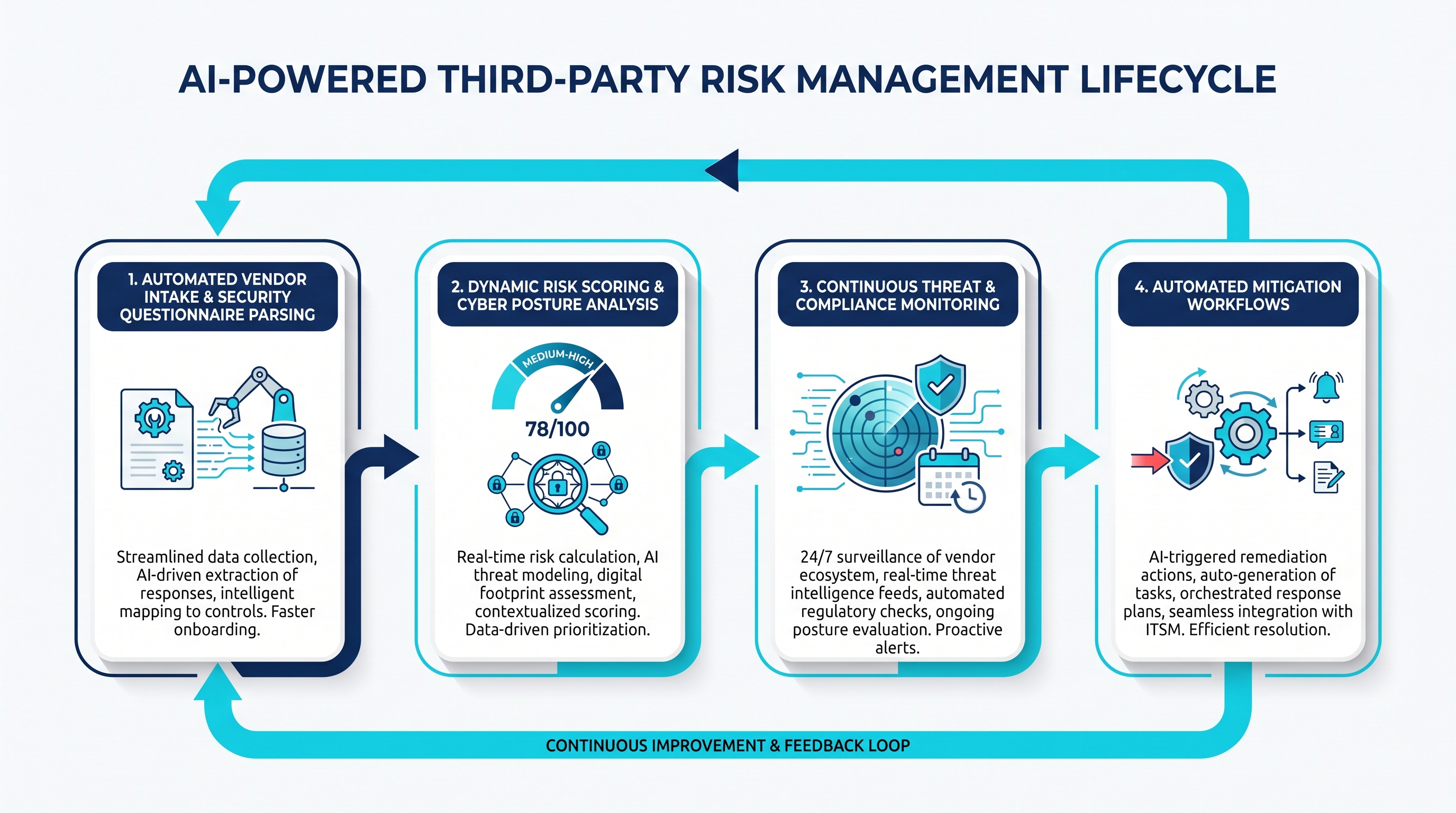
AI-Powered TPRM: The Four-Stage Architecture
Stage 1: Intelligent Vendor Intake
AI workers ingest SIG, CAIQ, SOC 2 reports, and ISO 27001 certificates automatically. NLP extracts structured control evidence from unstructured PDFs. Intake that consumed 40-80 analyst hours completes in under 4 hours.
Stage 2: Continuous Threat Surface Monitoring
AI workers continuously scan dark web marketplaces, CVE databases, news feeds, and DNS health indicators. Risk scores update in real time, not annually.
Stage 3: Automated Risk Scoring and Tiering
ML models synthesize questionnaire responses, threat signals, and financial health indicators into composite risk scores across five dimensions: cybersecurity, data privacy, operational resilience, financial stability, and ESG.
Stage 4: Remediation Orchestration
When risk thresholds are breached, AI workers generate remediation briefs with specific control gaps and recommended actions. Integration with contract platforms ensures risk findings inform renewal negotiations.
!Operational Impact of AI TPRM
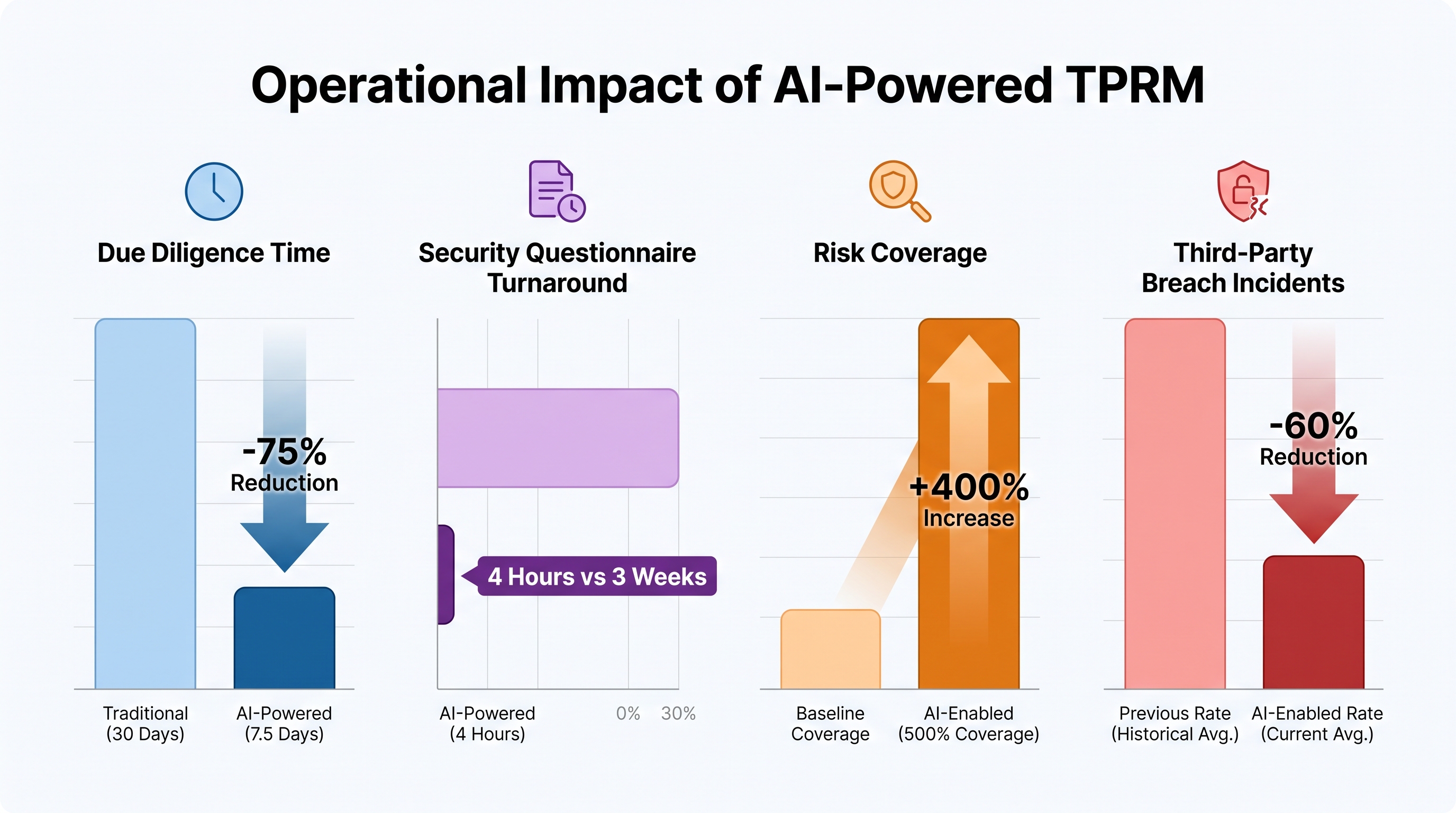
Quantified Operational and Financial Impact
| Metric | Baseline | AI-Powered | Improvement |
|---|---|---|---|
| Vendor intake cycle time | 40-80 hours | Under 4 hours | -90% |
| Due diligence scope | 15% of vendors | 95% of vendors | +80pp |
| Annual breach incidents | 3.7 per year | 1.5 per year | -60% |
| Risk analyst FTE per 100 vendors | 1.2 FTE | 0.3 FTE | -75% |
Implementation Roadmap
Phase 1: Connect AI to identity providers, procurement, and contract management. Run initial scoring across all vendors.
Phase 2: Deploy smart questionnaire automation. Activate continuous threat monitoring.
Phase 3: Integrate risk scores into contract renewals. Activate board reporting.
The Strategic Imperative
SEC, EU DORA, and emerging supply chain regulations are increasing board-level accountability for third-party risk. Organizations that deploy AI-powered TPRM now reduce breach exposure, reduce compliance findings, and free risk professionals for strategic work.
This article was written with AI assistance.