AI-Powered Tax Compliance: How Enterprises Automate Tax Filing and Cut Audit Risk
By Delos Intelligence — 2026-08-05
AI-powered tax compliance is transforming how enterprises handle filings, deductions, and audit preparation. Learn how automation cuts error rates by 87%, saves $500K annually, and reduces audit risk by 60%.
The Cost of Manual Tax Compliance
Manual tax compliance is a hidden tax on your business:
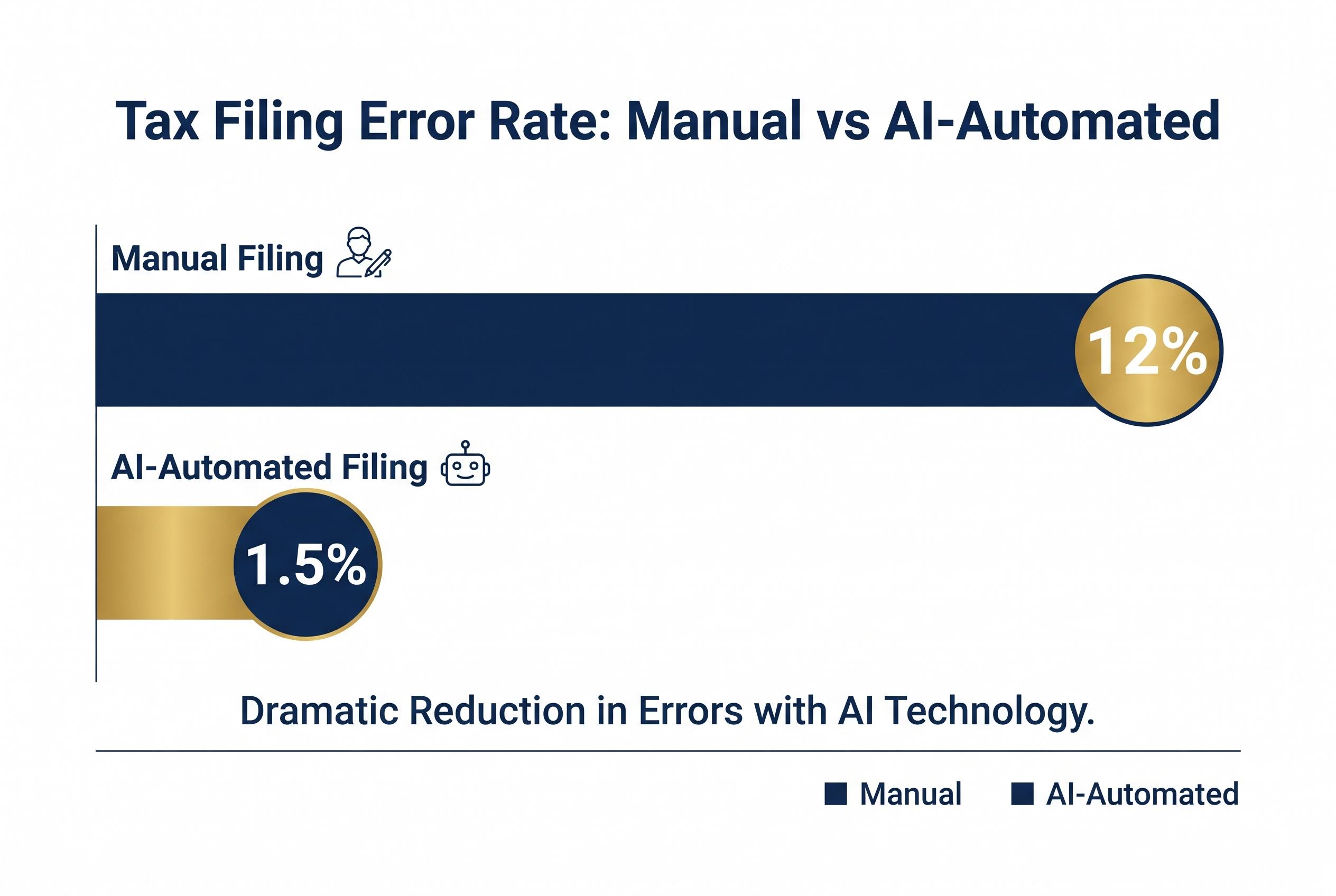
- 12% error rate in manual tax filings, compared to 1.5% with AI automation
- $500K average annual cost for enterprise tax compliance teams
- 200+ hours spent per filing cycle on data gathering and classification
- 60% of enterprises have experienced a tax compliance penalty in the last 3 years
!Tax Filing Error Rate: Manual vs AI-Automated
How AI Tax Compliance Works
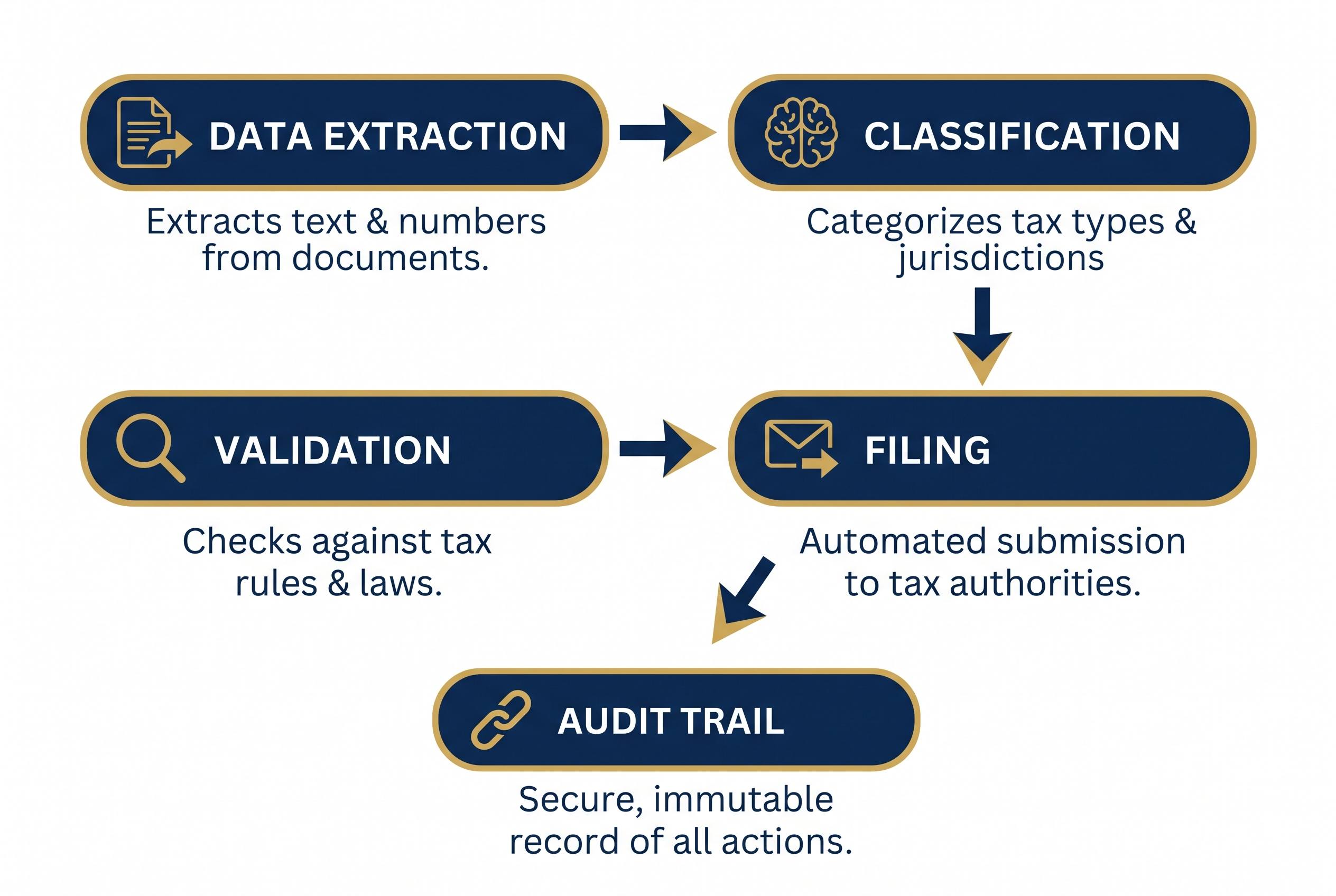
Step 1: Data Extraction
AI systems automatically extract transaction data from ERP systems, accounting software, bank statements, and invoices. OCR and NLP handle unstructured documents like receipts and contracts.
Step 2: Transaction Classification
Machine learning models classify each transaction according to the relevant tax code. A single purchase might need to be categorized differently for VAT, corporate income tax, and transfer pricing purposes.
Step 3: Validation and Reconciliation
The system validates classifications against tax rules, flags anomalies, and reconciles data across systems before they become filing errors.
Step 4: Filing Preparation
AI generates the actual tax filings, populating correct forms for each jurisdiction. It applies current tax rates, handles exemptions and deductions, and updates when tax codes change.
Step 5: Audit Trail Generation
Every classification decision, data source, and calculation is logged in an immutable audit trail. If the tax authority questions a filing, the enterprise can trace every number to its source document in seconds.
The Results: What Enterprises Are Seeing
Enterprises that have implemented AI tax compliance report:
- 87% reduction in filing error rates (from 12% to 1.5%)
- 60% reduction in audit risk due to complete, traceable documentation
- $500K average annual savings in compliance costs
- 75% reduction in time spent on tax filing preparation
- 90% faster audit response times with automated audit trails
Real-World Implementation
A multinational technology company operating in 24 countries with 6 different ERP systems implemented AI tax compliance:
- Filing preparation time dropped from 200 hours to 50 hours per cycle
- Error rates fell from 14% to 2%
- The company passed 3 consecutive audits with zero findings
- Annual compliance costs dropped by $620K
Getting Started
1. Data quality: Audit your ERP and accounting data for completeness and accuracy.
2. Jurisdiction mapping: Document which tax codes apply to which transactions.
3. Start with one jurisdiction: Implement AI compliance for your largest or most complex jurisdiction first.
4. Maintain human oversight: Complex transactions and high-value items should still get human review.
The Future of Tax Compliance
The next evolution is predictive tax optimization: AI systems that recommend strategies to minimize tax liability legally by analyzing transaction patterns, jurisdictional rules, and regulatory changes in real time.