AI Code Review: How Enterprises Catch 80% of Bugs Before They Reach Production
Par Delos Intelligence — 2026-08-01
Learn how AI-powered code review helps enterprises detect 80% of bugs before production, reduce security vulnerabilities by 70%, and accelerate development cycles.
Software bugs cost enterprises an average of $1.7 trillion annually worldwide. A bug caught in production costs 100x more than one caught during code review. Yet traditional manual code review catches only 30-40% of defects. AI-powered code review is transforming this landscape.
The Limitations of Manual Code Review
Manual code review has inherent limitations:
- Human fatigue: Reviewers miss defects after reviewing large volumes of code, with detection rates dropping significantly after the first 30 minutes
- Inconsistent standards: Different reviewers apply different criteria
- Limited scope: Manual review often misses subtle security vulnerabilities and performance issues
- Time constraints: With teams under pressure to ship, reviews are often rushed
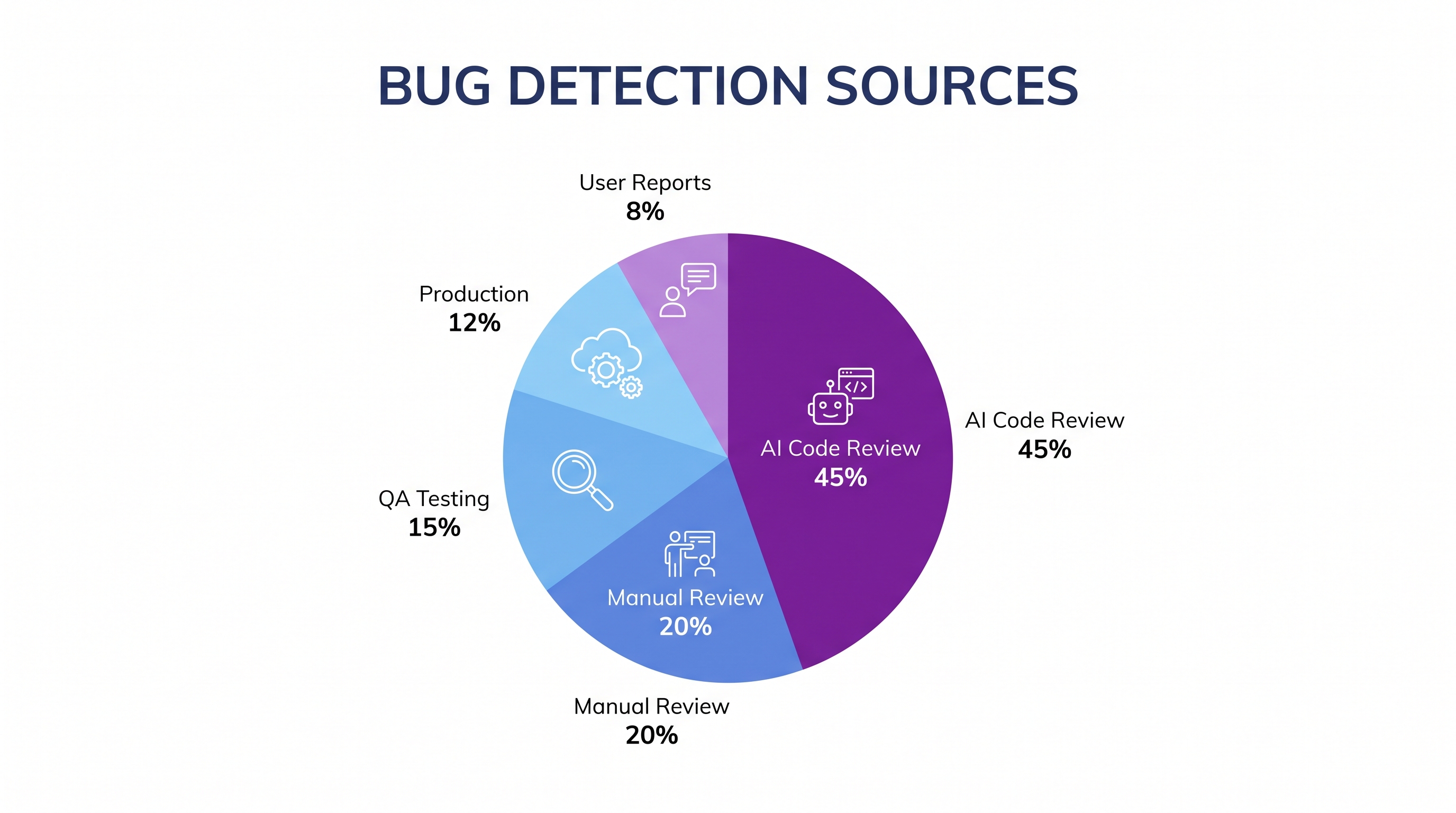
!Bug Detection Sources: Where Bugs Are Found
How AI Code Review Works
AI code review systems use static analysis, machine learning, and pattern recognition:
Static Analysis Enhancement: AI models learn from historical review data to filter false positives, reducing noise by 70% while improving detection accuracy.
Pattern Recognition: AI models trained on millions of code repositories identify code patterns statistically likely to contain bugs.
Security Vulnerability Detection: AI analyzes code for common vulnerability patterns (SQL injection, XSS, buffer overflows) and emerging threat patterns.
Context-Aware Analysis: Unlike traditional linters, AI understands the context of code changes, distinguishing between temporary debug statements and legitimate logging calls.
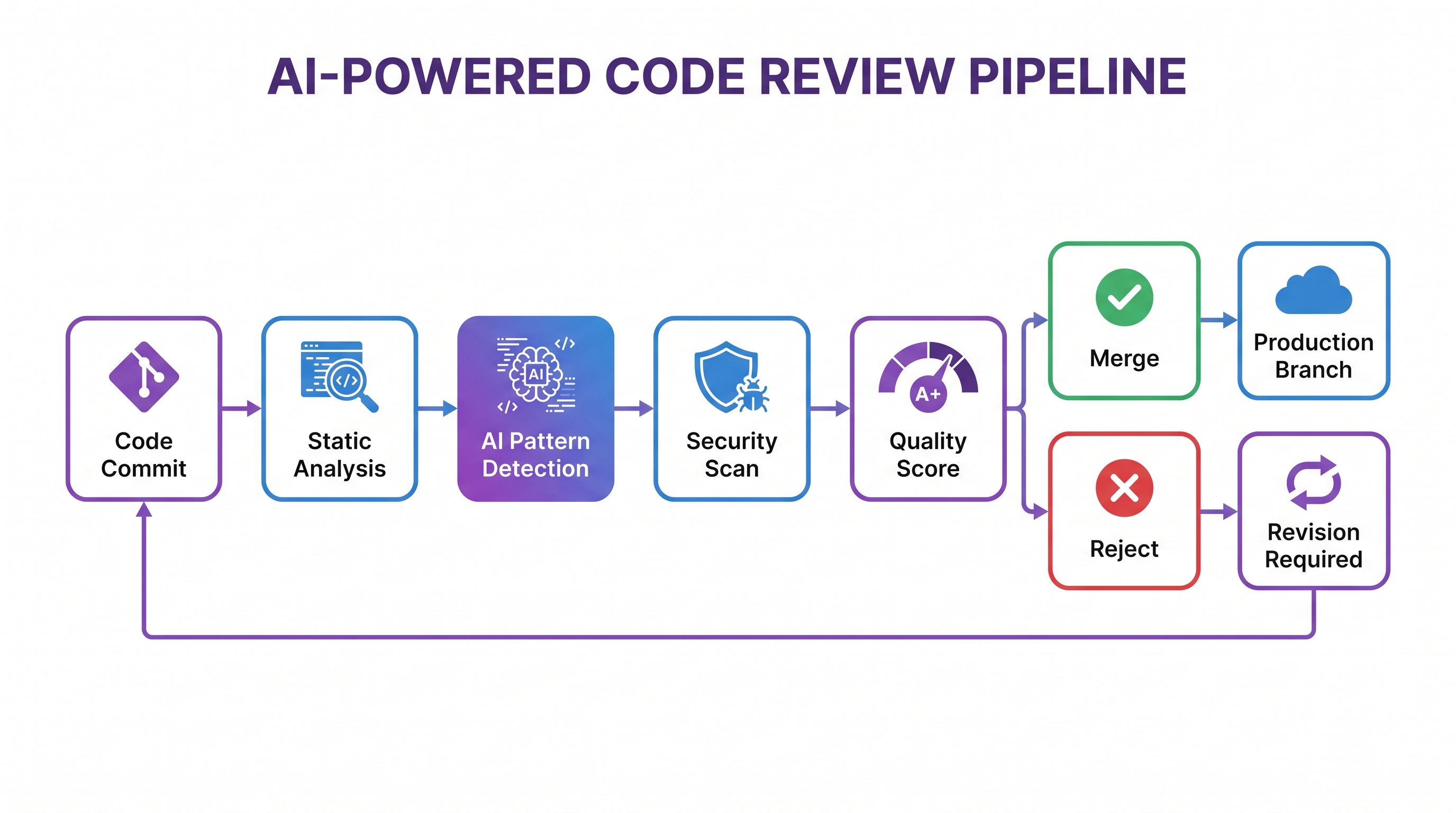
The AI Code Review Pipeline
1. Code Commit: AI automatically analyzes changes against the codebase, historical bug patterns, and security vulnerability databases.
2. Static Analysis: Enhanced static analysis with AI-filtered rules.
3. AI Pattern Detection: ML models analyze for bug patterns, anti-patterns, and code smells.
4. Security Scan: Checks for known vulnerability patterns and insecure dependencies.
5. Quality Score: The AI generates a quality score with specific issues and suggested fixes.
6. Merge Decision: Based on quality score, the system approves, requests changes, or blocks the merge.
Measurable Impact
Enterprises implementing AI code review report:
- 80% of bugs caught before production (up from 30-40% with manual review)
- 70% reduction in security vulnerabilities
- 50% faster review cycles
- 40% reduction in production incidents
- 30% improvement in code quality metrics
A financial services company deployed AI code review across 200 developers. Within six months, production incidents dropped 43% and security vulnerabilities in production decreased 65%.
Integration with Existing Workflows
The most effective implementation uses a tiered approach:
- AI-first review: Handles common bugs, security issues, and style violations (60-70% of review workload)
- Human review for complex logic: Focuses on architecture decisions and edge cases
- AI-assisted review: AI provides context and suggestions to human reviewers for complex changes
This tiered approach reduces review time by 50% while improving overall detection rates.
Path to Implementation
Start with a pilot team: Deploy with one or two teams, measure impact, refine configuration, build the business case.
Integrate with existing CI/CD: Run automatically on every pull request for 100% coverage.
Train on your codebase: Fine-tuning on your specific codebase and historical bug data improves accuracy by 20-30%.
Measure and iterate: Track bug detection rate, false positive rate, review time, and production incidents.
AI code review will become as fundamental to software development as version control and automated testing.