AI-Powered Insurance Underwriting: How Insurers Cut Risk Assessment Time by 80%
Par Delos Intelligence — 2026-08-05
AI-powered insurance underwriting is transforming how insurers assess risk, price policies, and approve coverage. Discover the 80% time reduction, the 5-step AI underwriting pipeline, and why 73% of insurers are already investing.
The Problem: Why Traditional Underwriting Is Breaking
Traditional underwriting has three structural problems:
1. Speed: A single complex commercial policy can take 15-30 days to underwrite. Competitors with faster processes win the business.
2. Consistency: Two underwriters reviewing the same application often arrive at different risk scores. A 2025 study found a 23% variance in risk assessments across underwriters at the same firm.
3. Data blind spots: Human underwriters cannot process unstructured data like satellite imagery, social media risk signals, or real-time IoT sensor feeds.
!Risk Assessment Time: Manual vs AI-Powered
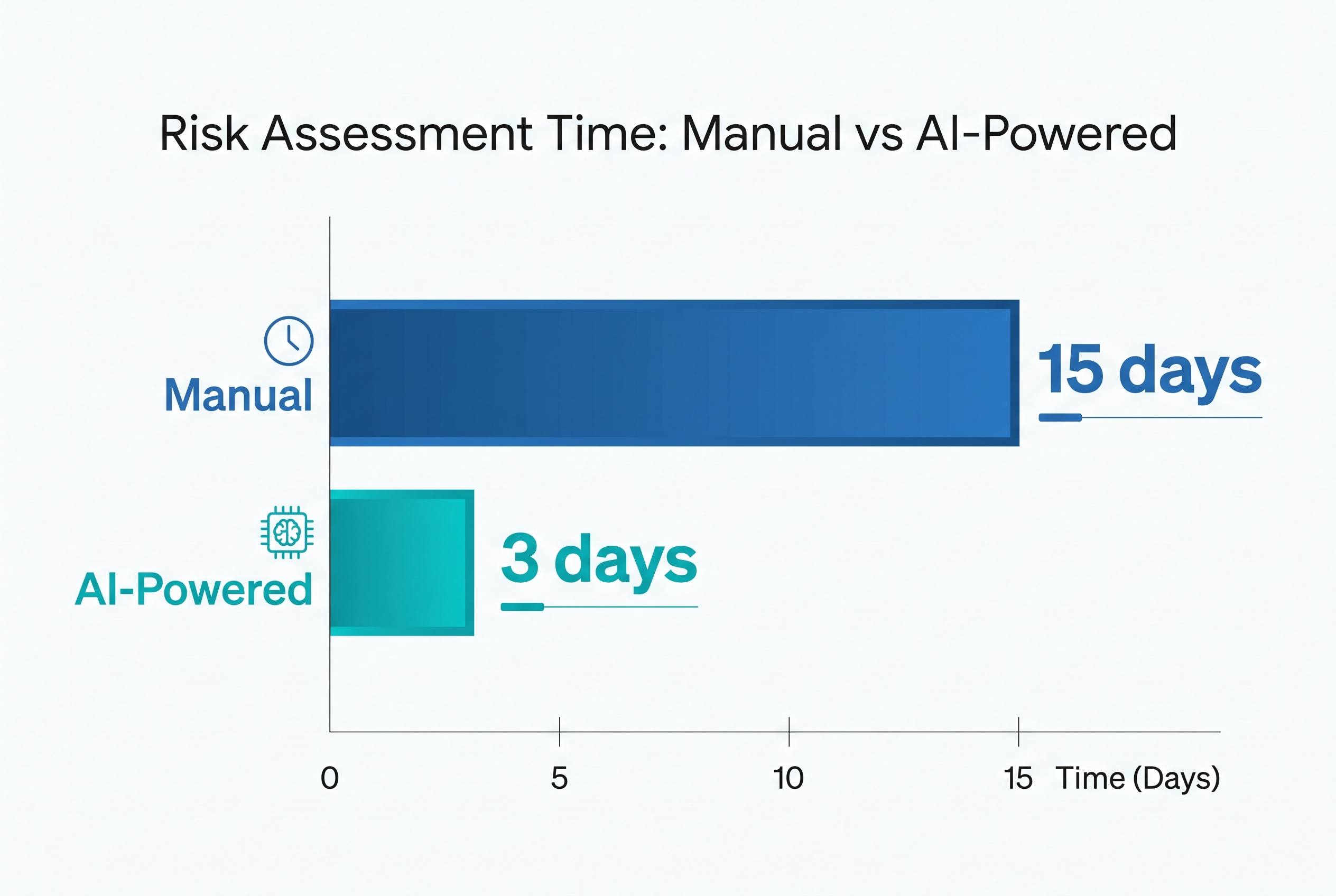
The result: insurers lose profitable policies to faster competitors, take on risks they do not fully understand, and spend millions on manual review that adds diminishing value.
How AI Underwriting Works: The 5-Step Pipeline
!AI Insurance Underwriting Pipeline
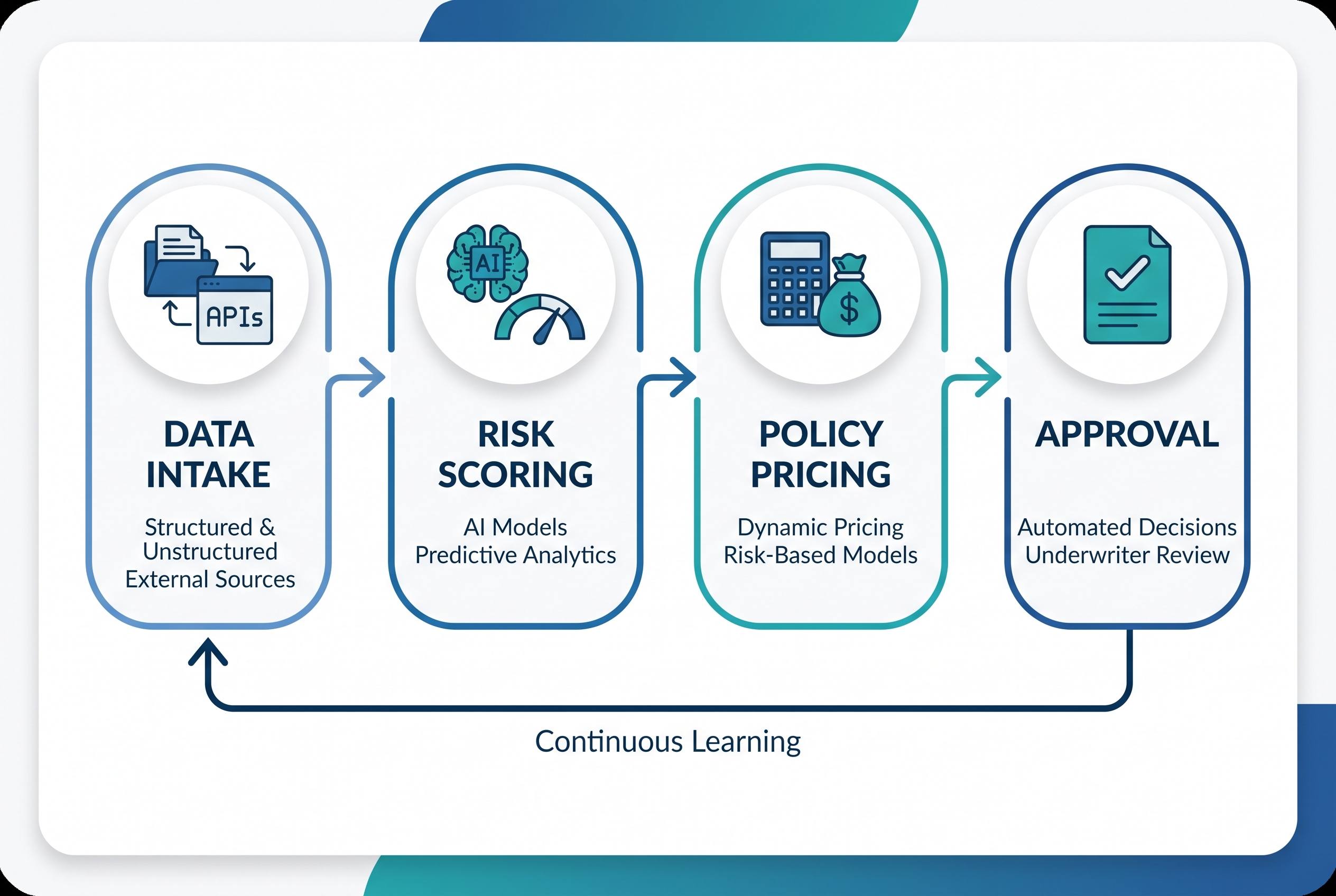
Step 1: Automated Data Ingestion
AI systems pull data from dozens of sources simultaneously: applicant forms, credit bureaus, medical databases, property records, satellite imagery, IoT sensors, and historical claims data. What takes a human underwriter 3 days of document gathering happens in minutes.
Step 2: Risk Scoring and Classification
Machine learning models analyze the aggregated data to produce a risk score. These models are trained on millions of historical policies and claims, identifying patterns that human underwriters cannot see.
Step 3: Policy Pricing Optimization
Once the risk score is established, AI pricing engines calculate the optimal premium. They factor in risk probability, competitive pricing data, regulatory constraints, and portfolio balance.
Step 4: Decision and Approval
For low-risk policies, AI can issue instant approvals. For complex or high-risk cases, the system flags the application for human review with a pre-built risk summary. AI handles the 80% of straightforward cases while humans focus on the 20% that require judgment.
Step 5: Continuous Learning
Every policy outcome feeds back into the model. Over time, the system becomes more accurate at predicting risk and pricing policies.
The Numbers: What Insurers Are Seeing
Insurers that have implemented AI underwriting report:
- 80% reduction in risk assessment time (from 15 days to 3 days)
- 90% reduction in manual data entry errors
- 23% increase in policy approval rates without increasing loss ratios
- 15% improvement in premium accuracy
- $2.3M average annual savings per underwriting team
A 2026 industry survey found that 73% of insurers are already investing in AI underwriting technology.
Real-World Implementation
A mid-size commercial property insurer handling 5,000 policies per year implemented AI underwriting. Results:
- Assessment time dropped to 2-3 days for standard policies
- The team now handles 8,000 policies per year with the same headcount
- Loss ratio improved by 4 percentage points due to better risk selection
- Customer satisfaction increased because policies are issued faster
Getting Started
1. Data readiness: Ensure historical policy and claims data is clean and accessible.
2. Regulatory compliance: Choose models that provide transparency into risk score calculations.
3. Human-in-the-loop: Design the process so AI handles standard cases and humans handle edge cases.
4. Phased rollout: Start with a single product line, measure results, and expand.
The Future of Underwriting
AI is replacing the manual, repetitive parts of underwriting so that human expertise is focused where it matters most: complex risks, relationship management, and strategic portfolio decisions. The insurers who adopt AI underwriting now will have a 2-3 year competitive advantage over those who wait.