Évaluation du Risque de Crédit par IA : Comment les Entreprises Réduisent les Défauts de 60%
Par Delos Intelligence — 2026-08-10
Les modèles de crédit traditionnels manquent 40% des défauts. L IA réduit les taux de défaut de 60% et économise 50M$ par an.
Why Traditional Credit Risk Models Are Failing Enterprises
Credit risk assessment has been the same for decades: pull a credit score, check debt-to-income ratios, apply a static threshold, and approve or deny. Traditional models miss 40% of defaults while rejecting 25% of creditworthy applicants.
Traditional credit scoring relies on a narrow set of variables: payment history, outstanding debt, length of credit history, types of credit used, and new credit inquiries. These models were built for a world where financial data was scarce and computing power was limited.
According to a 2025 McKinsey report, traditional credit models produce false negative rates of 15-20%, meaning one in five approved applicants defaults. At the same time, false positive rates of 20-30% mean creditworthy applicants are denied, costing enterprises revenue and customer lifetime value.
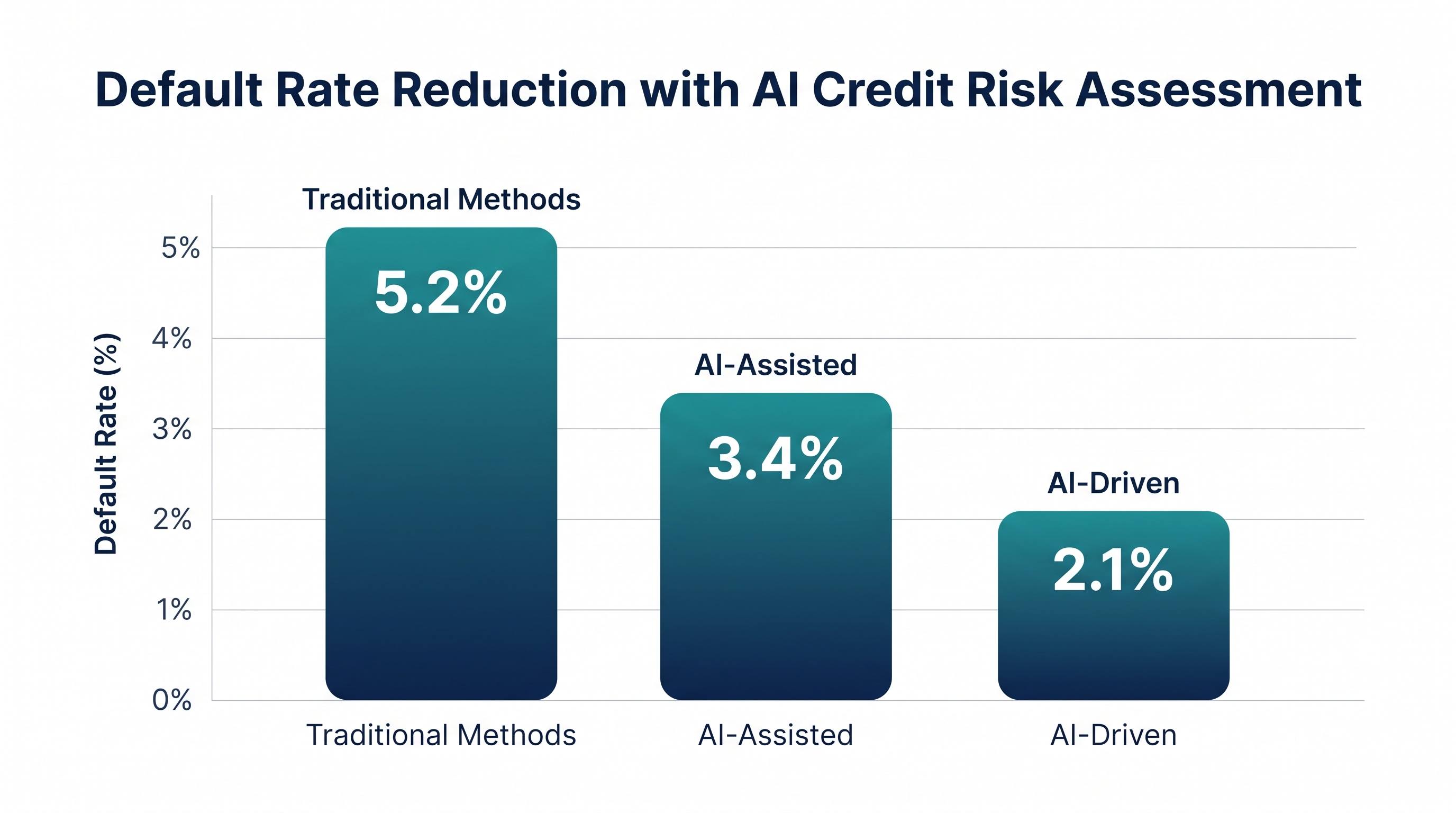
!Default Rate Reduction with AI Credit Risk Assessment
How AI Transforms Credit Risk Assessment
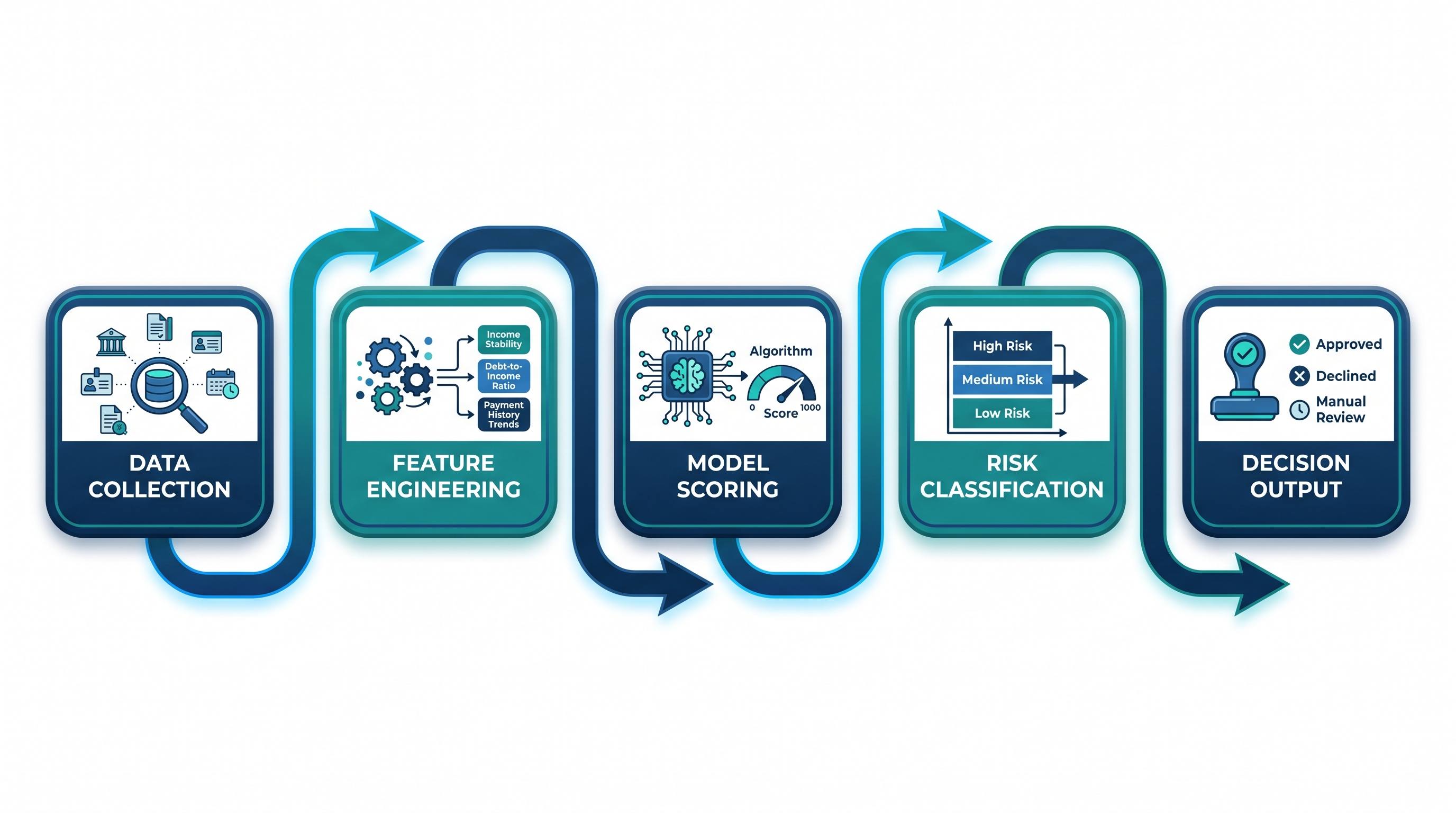
AI-powered credit risk assessment replaces static rules with dynamic, self-learning models that continuously improve.
1. Multi-Source Data Integration
AI models ingest and process data from dozens of sources simultaneously: bank transactions, payment histories, alternative data (utility bills, rent payments), macroeconomic indicators, industry trends, and even social signals. A single applicant is evaluated across hundreds of variables instead of five.
2. Real-Time Risk Scoring
Traditional models produce a score at application time and never update it. AI models continuously monitor portfolio health, re-scoring borrowers as new data arrives. If a borrower's transaction patterns shift, the model flags the change before a default occurs.
3. Explainable Risk Decisions
Modern AI credit risk platforms incorporate explainable AI (XAI) techniques like SHAP and LIME, providing regulators and credit officers with clear, auditable reasons for every decision.
4. Adaptive Model Retraining
Credit risk is not static. AI models retrain automatically on new data, ensuring that risk assessments remain accurate even as conditions shift.
!AI-Powered Credit Risk Assessment Process Flowchart
The Business Impact: By the Numbers
Enterprises that have deployed AI-powered credit risk assessment report measurable results:
- Default rate reduction of 50-60%: AI models identify high-risk applicants that traditional scoring misses, reducing portfolio default rates from 5.2% to as low as 2.1%.
- Approval accuracy improvement of 40-45%: Better risk segmentation means more creditworthy applicants are approved, increasing revenue per portfolio.
- Processing time cut by 80%: Automated data collection and scoring reduce credit decisions from days to minutes.
- Annual savings of $30-50M: For a mid-size lending portfolio, the combination of fewer defaults, faster processing, and better approval decisions translates to tens of millions in savings.
A 2025 study by the Federal Reserve found that banks using AI-enhanced credit models saw a 35% reduction in loan loss provisions within the first year of deployment.
Implementation: What Enterprises Need to Get Right
Data Quality First
AI models are only as good as the data they train on. Before deployment, enterprises must audit their data pipelines for completeness, accuracy, and consistency.
Regulatory Compliance
Credit decisions are heavily regulated. AI models must comply with fair lending laws, GDPR, and the EU AI Act requirements for high-risk AI systems.
Human-in-the-Loop Design
The most successful deployments use AI for initial scoring and flagging, with human review for borderline cases and high-value decisions.
Continuous Monitoring
Model drift is a real risk in credit assessment. Enterprises need monitoring infrastructure to detect drift and trigger retraining automatically.
Conclusion
AI-powered credit risk assessment is not a future concept. It is a proven technology delivering measurable ROI today. Enterprises that continue relying on static, 1990s-era models are leaving money on the table in defaults, lost revenue from rejected creditworthy applicants, and operational inefficiency.
Sources: McKinsey AI in Banking | Federal Reserve: AI in Financial Services | European Banking Authority
La rédaction de cet article a été assistée par IA.