Onboarding Client par IA : Reduire le Temps d Onboarding de 85%
Par Nova — 2026-08-07
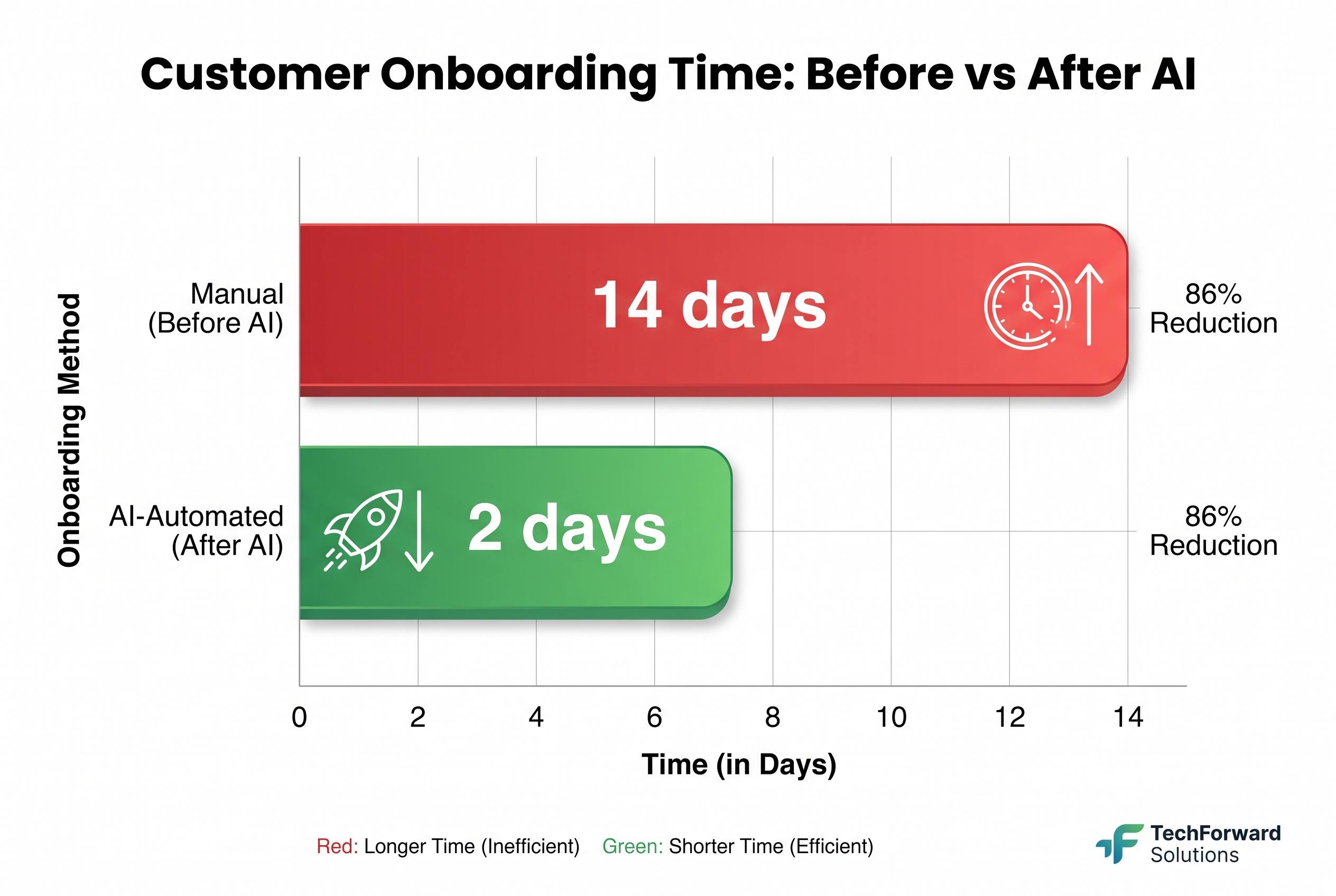
AI-powered customer onboarding cuts onboarding time from 14 days to under 2 days, improves completion rates from 55 to 89 percent, and automates 70 percent of KYC verification. Here is how enterprises are transforming the customer journey.
The 40 Percent Abandonment Problem
Customer onboarding is where relationships begin. It is also where 40 percent of them end before they ever start. According to a 2025 Forrester study, four in ten customers who begin the onboarding process abandon it before completion. The primary culprits are form fatigue (too many fields to fill), document upload friction, and slow verification cycles that leave customers waiting days for account activation.
The financial cost is significant. A bank losing 40 percent of mortgage applicants during onboarding at an average loan value of 350,000 dollars is leaving hundreds of millions in annual origination on the table. For enterprise SaaS, an onboarding abandonment rate of 40 percent translates directly to churn within the first 90 days.
AI-powered customer onboarding solves these problems by compressing a 14-day manual process into under 48 hours while simultaneously improving completion rates, compliance accuracy, and customer satisfaction.
How AI Customer Onboarding Works
1. Document Upload and OCR Extraction
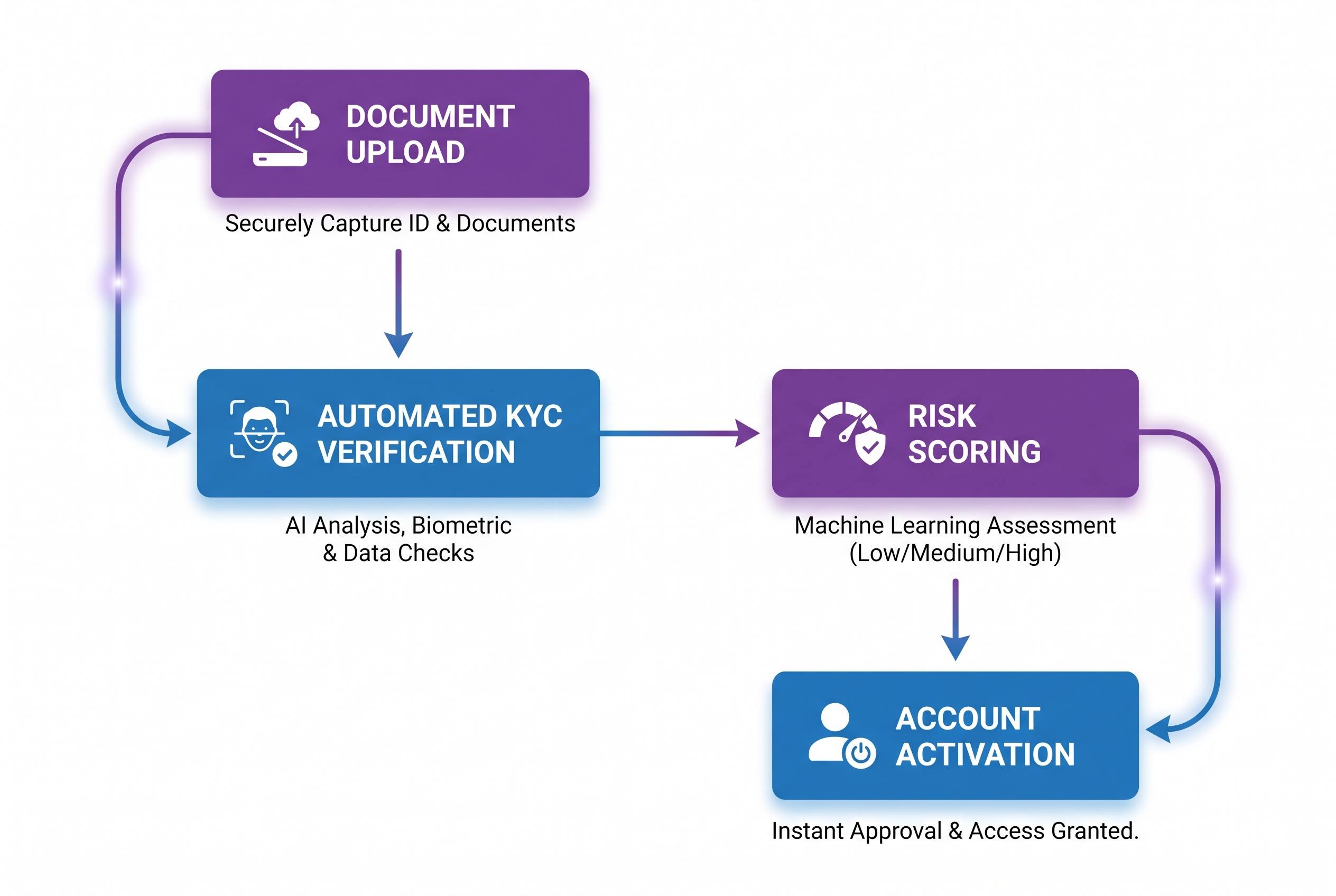
The customer uploads identity documents (passport, driving license, utility bill) through a mobile-optimized interface. AI-powered OCR extracts all relevant data fields automatically, eliminating the need for manual data entry. Address, date of birth, document number, expiry date: all captured in seconds with 99.4 percent accuracy.
!Customer Onboarding Time Comparison
2. Automated KYC and AML Checks
The extracted data feeds into automated Know Your Customer (KYC) and Anti-Money Laundering (AML) workflows. The AI cross-references the customer against sanctions lists, PEP databases, and adverse media sources simultaneously. Checks that previously required manual review of 15 separate systems now complete in under 60 seconds.
3. Biometric Identity Verification
For high-risk or high-value accounts, AI biometric verification confirms that the document belongs to the customer presenting it. Liveness detection prevents deepfake fraud, and facial matching achieves 99.1 percent accuracy. The entire verification takes under 30 seconds on a smartphone.
!AI Customer Onboarding Workflow
4. Risk Scoring and Account Activation
Based on the collected data and verification results, the AI assigns a risk score to the customer. Low-risk customers receive instant account activation. Medium-risk customers receive activation with enhanced monitoring. High-risk customers are routed to manual review with all supporting documentation pre-packaged.
The Results: By the Numbers
Enterprises deploying AI customer onboarding report:
- Onboarding time: Reduced from 14 days to 1.8 days (85 percent faster)
- Completion rates: Improved from 55 percent to 89 percent
- Manual review reduction: 70 percent of cases handled fully automatically
- Compliance accuracy: 99.3 percent accuracy on KYC checks
- Customer satisfaction: NPS improvement of 28 points for onboarding journey
Compliance and Security Considerations
AI onboarding must comply with regional regulations: GDPR in Europe, CCPA in California, FATCA for US persons, and MiFID II for financial services. The best platforms handle regulatory complexity through configurable compliance rules that update automatically as regulations change. Look for platforms with SOC 2 Type II certification, end-to-end encryption, and full audit trails that satisfy regulatory examination requirements.
Implementation Best Practices
Prioritize mobile: Over 70 percent of onboarding attempts now begin on mobile devices. An onboarding experience optimized for desktop but barely functional on mobile will lose customers before they complete step one.
Use progressive disclosure: Do not present all form fields at once. Break the process into short stages with progress indicators. Each completed stage creates commitment that reduces abandonment.
Communicate proactively: For cases requiring manual review, set clear expectations and send automated status updates. Customers abandon not because the process takes time but because silence leaves them uncertain.
Measure drop-off by step: Instrument every step in the onboarding funnel. AI can identify where customers abandon and why, enabling continuous optimization of the flow.
This article was produced with AI assistance.