Gestion de l Energie par IA : Reduire les Couts de 25%
Par Delos Intelligence — 2026-08-11
Energy costs consume 15-20% of operating expenses. AI-powered energy management cuts costs by 25%, reduces carbon emissions by 30%, and optimizes consumption with smart grid analytics.
The Energy Management Challenge
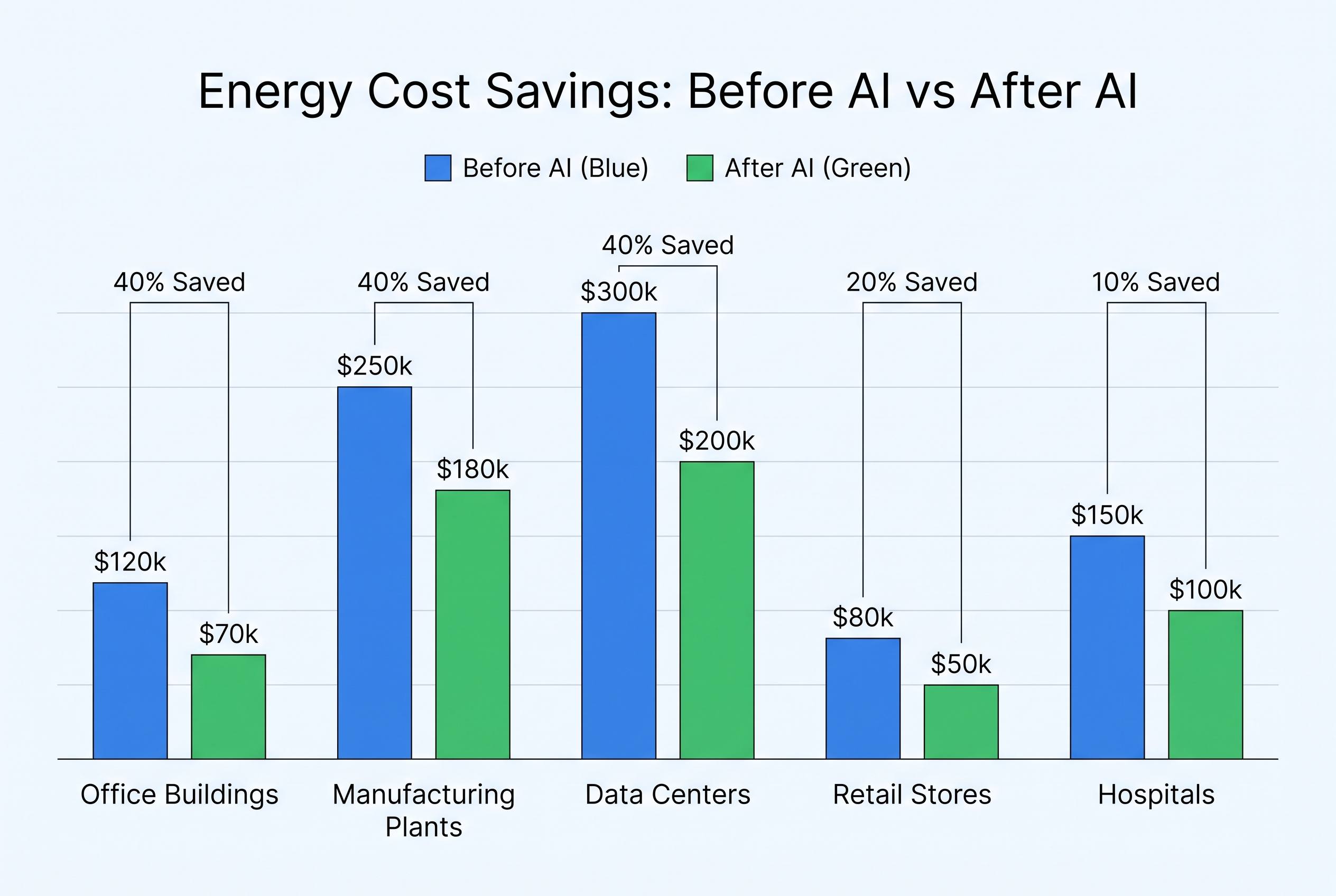
Energy is the second-largest operating expense for manufacturing and data-intensive enterprises, consuming 15-20% of total OpEx. Enterprises pay 30-40% more than necessary due to peak demand charges. Energy waste from inefficient equipment scheduling costs $3-8M annually for large facilities. Manual energy audits are point-in-time snapshots, not continuous monitoring.
How AI Transforms Energy Management
Real-Time Consumption Monitoring
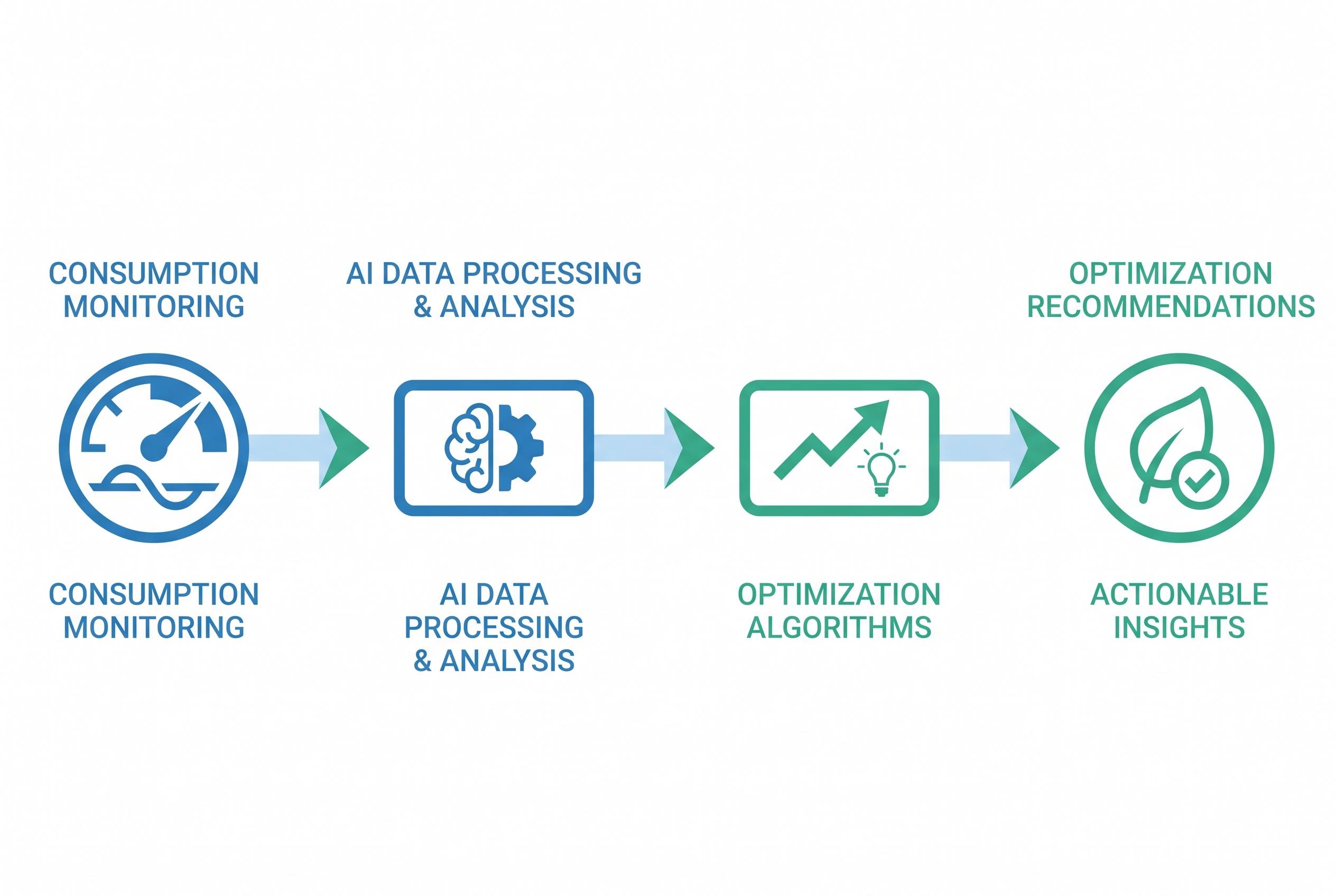
AI integrates with smart meters, IoT sensors, and building management systems to provide a live view of energy consumption across every asset, floor, and facility. This visibility alone typically uncovers 10-15% in immediate savings.
Predictive Load Optimization
AI models predict energy demand patterns based on production schedules, weather forecasts, occupancy data, and historical consumption. This enables enterprises to shift energy-intensive operations to off-peak hours, reducing peak demand charges by 20-30%.
Smart Grid Integration
For enterprises with on-site generation (solar, wind, CHP), AI optimizes the balance between self-generated and grid power, selling excess back during peak pricing and drawing from the grid during low-cost periods.
!AI Energy Management Workflow
Quantified Business Impact
- 25% reduction in total energy costs (Deloitte Energy, 2025)
- 30% reduction in carbon emissions
- 20-30% reduction in peak demand charges
- 15% improvement in energy efficiency
- $3-10M annual savings for large facilities
- Payback period: 8-14 months
Implementation Roadmap
Phase 1: Metering and Baseline (Weeks 1-6)
Install smart meters and IoT sensors at the asset level. Establish a 90-day baseline of consumption patterns. Identify the top 10 energy-consuming assets.
Phase 2: Analytics and Optimization (Weeks 7-14)
Deploy AI models for consumption forecasting and peak demand management. Implement automated load shifting. Connect to utility APIs for real-time pricing.
Phase 3: Advanced Optimization (Weeks 15-22)
Enable predictive maintenance for energy-intensive equipment. Integrate renewable energy sources with AI-driven dispatch. Automate carbon reporting.
Industry-Specific Applications
Manufacturing
AI optimizes machine scheduling to minimize peak demand, reduces idle time energy waste, and predicts equipment failures that cause energy spikes.
Data Centers
AI manages cooling systems (40% of data center energy use), optimizing temperature setpoints in real time based on server load predictions.
Commercial Real Estate
AI controls HVAC, lighting, and plug loads based on occupancy patterns, weather forecasts, and energy pricing, achieving 20-30% cost reductions.
Conclusion
AI-powered energy management delivers dual benefits: immediate cost savings of 25% and long-term sustainability improvements. With payback periods under 14 months and proven results across manufacturing, data centers, and commercial real estate, AI energy management has moved from pilot to standard practice.