Controle Qualite par IA : Detecter les Defauts 99% Plus Rapidement
Par Delos Intelligence — 2026-08-11
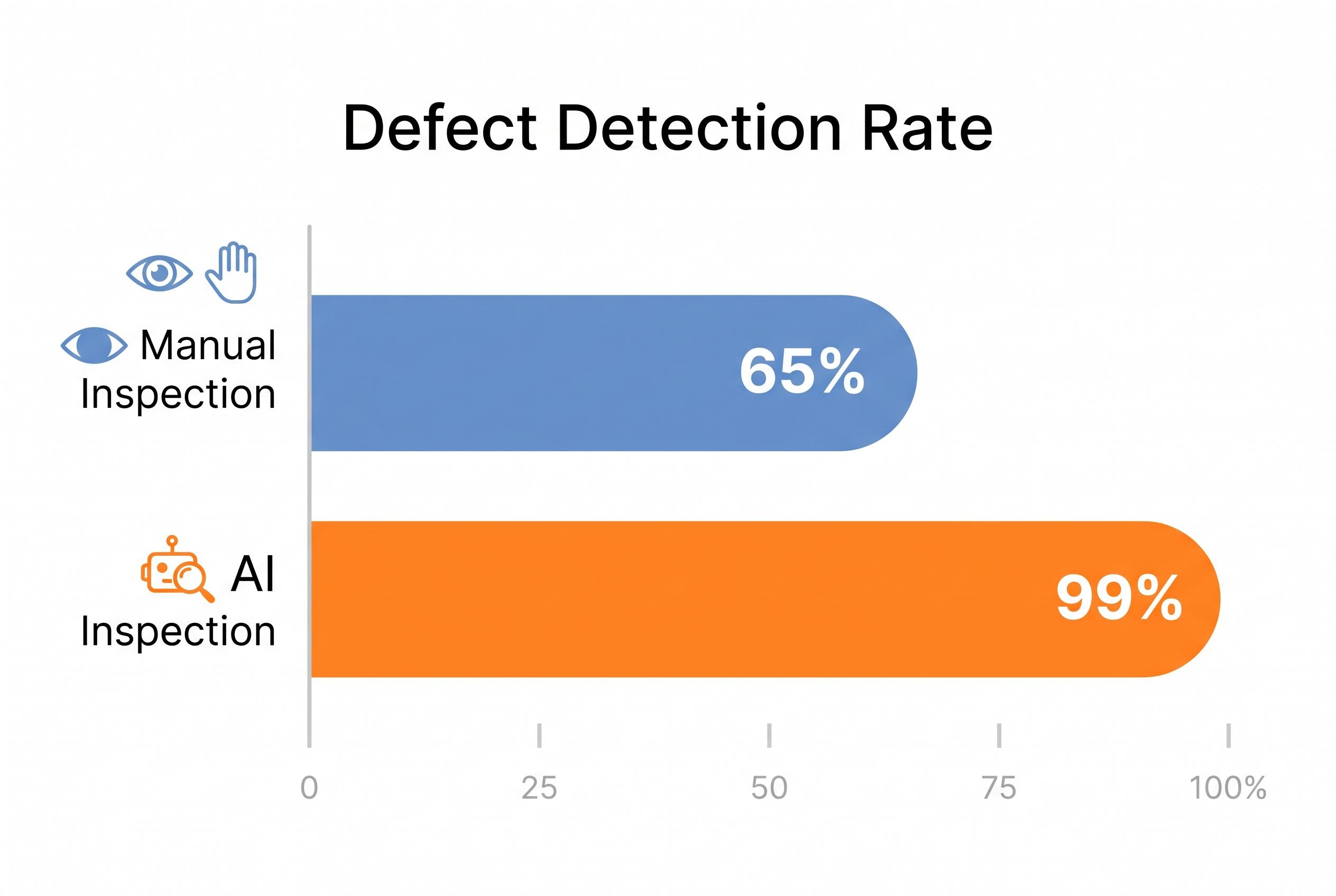
Manual quality inspection catches only 65% of defects. AI-powered quality control using computer vision detects 99% of defects in real time, cutting scrap costs by 50%.
The Limits of Manual Quality Inspection
Manufacturing defects cost enterprises $50 billion annually in scrap, rework, and warranty claims. Human inspectors miss 35% of defects on average (Deloitte, 2025). Inspection accuracy drops 20% after 2 hours of continuous work. Manual inspection is the bottleneck in high-speed production lines. Inconsistent standards across shifts and facilities compound the problem.
How AI Quality Control Works
Computer Vision for Defect Detection
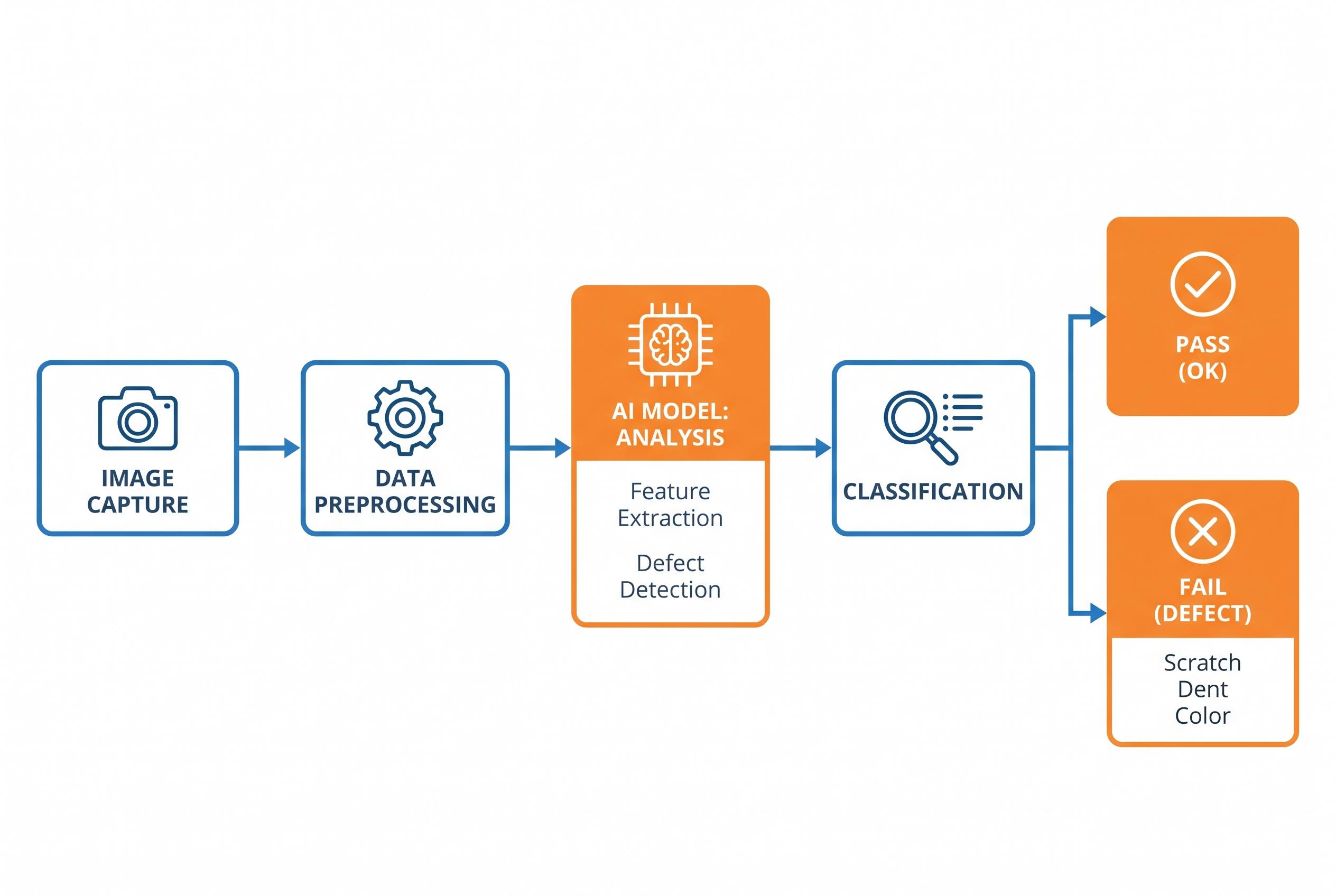
AI models trained on thousands of defect images identify surface defects, dimensional deviations, assembly errors, and color mismatches at production line speeds. Cameras capture every unit; the model classifies each as pass, fail, or review in under 100 milliseconds.
!Defect Detection Rate Comparison
Real-Time Process Monitoring
Beyond visual inspection, AI monitors process parameters (temperature, pressure, vibration, speed) to predict defects before they occur. This shifts quality control from reactive detection to proactive prevention.
Continuous Learning and Adaptation
Modern AI quality systems learn from every inspection. When a new defect type appears, the model retrains within hours using production data.
Quantified Business Impact
- 99% defect detection rate vs 65% manual (Aberdeen Group, 2025)
- 50% reduction in scrap and rework costs
- 40% reduction in warranty claims
- 30% reduction in inspection labor costs
- 10-15% improvement in OEE
- ROI typically achieved within 6-9 months
Implementation Roadmap
Phase 1: Assessment and Pilot (Weeks 1-6)
Identify the highest-defect product line. Install cameras and lighting at the inspection point. Collect 5,000+ labeled images.
Phase 2: Model Training and Deployment (Weeks 7-12)
Train the computer vision model. Deploy alongside manual inspection for parallel validation. Measure accuracy and false positive rates.
Phase 3: Full Automation (Weeks 13-18)
Once model accuracy exceeds 95%, transition to AI-first inspection with human review only for flagged exceptions.
Overcoming Implementation Challenges
- Data quality: start with well-lit, consistent imaging conditions
- False positives: set confidence thresholds above 90% to avoid unnecessary rejects
- Change management: train operators to work alongside AI, not against it
Conclusion
AI-powered quality control delivers measurable ROI within the first year. With defect detection rates approaching 99% and scrap cost reductions of 50%, the question for manufacturers is no longer whether to adopt AI inspection, but how quickly they can scale it.