Automatisation Entrepot par IA : Gains d Efficacite 50%
Par Delos Intelligence — 2026-08-18
Decouvrez comment le slotting dynamique et l optimisation des chemins de picking transforment les entrepots.
The Slotting and Picking Bottleneck in Modern Fulfilment
In a high-velocity fulfilment centre processing 50,000 order lines per day, picking labor accounts for 60 to 65 percent of total warehouse operating costs. Traditional static slotting assignments optimized for storage density rather than pick velocity create systemic inefficiencies: high-velocity SKUs placed in difficult-to-reach locations, complementary product clusters scattered across non-adjacent zones, and seasonal demand surges handled through manual reslotting projects that take weeks to execute.
Average picking path efficiency in manually-slotted warehouses operates at 58 to 67 percent of theoretical optimum. Every point of improvement in picking efficiency translates directly to throughput capacity and labor cost reduction without capital expenditure.
How AI Optimization Transforms Warehouse Operations
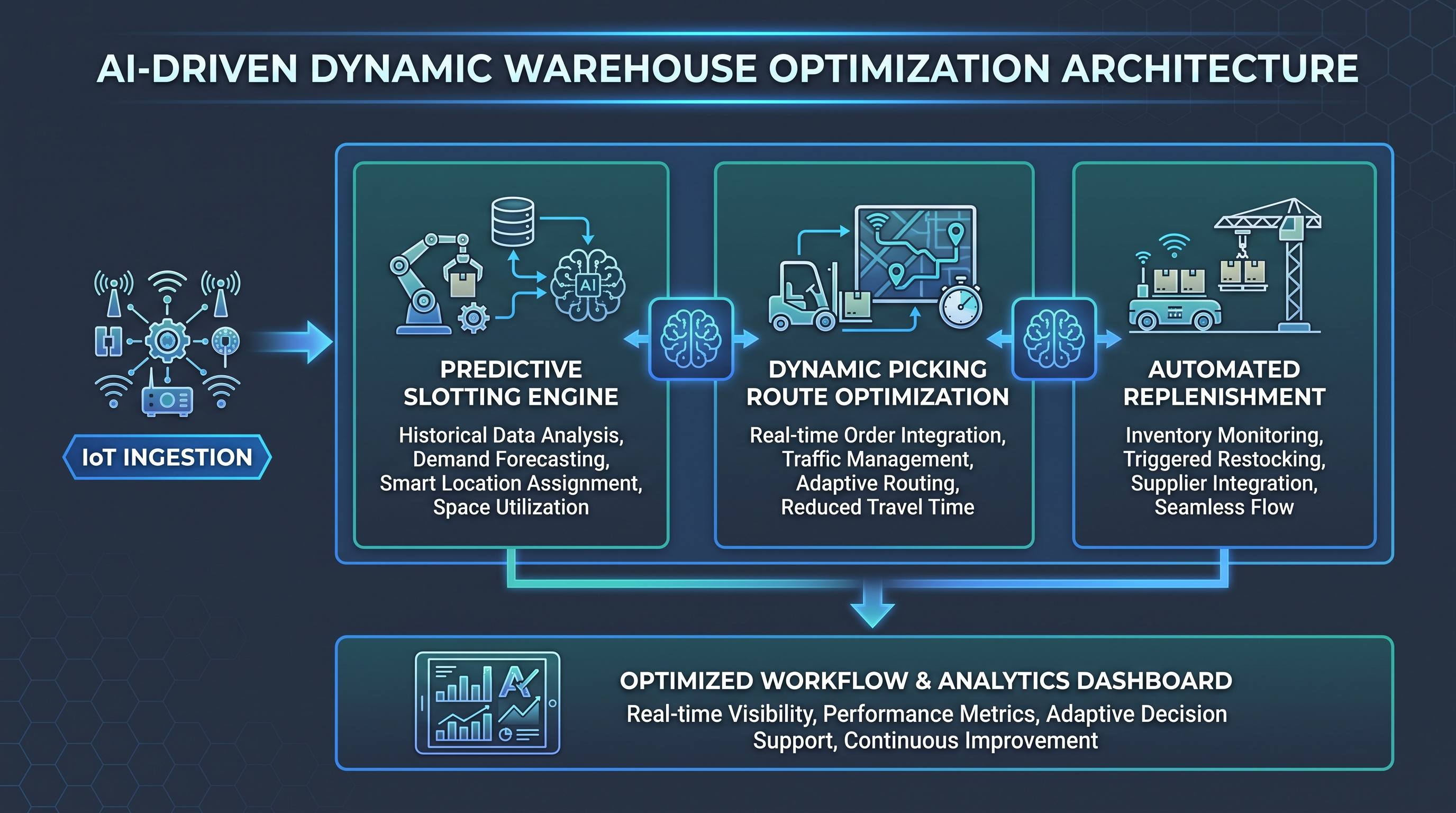
Dynamic Micro-Slotting Intelligence
AI slotting engines analyze real-time order history, SKU velocity rankings, product co-occurrence patterns, weight and dimensional characteristics, and ergonomic compliance requirements to continuously reoptimize slot assignments. Unlike quarterly static reslotting projects, AI engines generate incremental slot change recommendations daily, prioritizing moves with the highest throughput impact relative to the labor cost of executing the move.
Seasonal and promotional demand signals are incorporated with a 14-day forward-looking horizon, ensuring that velocity rankings reflect anticipated rather than trailing demand.
!AI-Powered Warehouse Automation Workflow
Traveling Salesperson Optimization for Order Batching
Order batching algorithms group multi-line orders with overlapping pick zones into efficient batch picking sequences, reducing travel distance per unit picked. AI batch optimization models solve warehouse-specific traveling salesperson variants in real time for batches of 8 to 24 orders, incorporating zone sequencing constraints, weight capacity limits, and carrier cutoff deadlines.
Dynamic wave release timing aligns pick activity with packing and shipping station throughput, eliminating queue buildup that creates artificial bottlenecks downstream of the pick operation.
Human-Robot Collaborative Orchestration
In facilities deploying autonomous mobile robots (AMR) or goods-to-person systems alongside human pickers, AI orchestration layers manage task allocation across both workforces in real time. The system assigns picks requiring dexterity, damage assessment, or non-standard packaging to human pickers while routing high-volume standard picks to robotic systems, maximizing the comparative advantage of each resource type.
Predictive Inventory Balancing and Surge Mitigation
AI demand forecasting models generate SKU-level replenishment triggers 4 to 6 hours before forward pick locations deplete, preventing pick line starvation during peak throughput windows. During unexpected demand surges, the system dynamically reallocates labor from lower-priority zones to surge-affected pick areas.
Enterprise ROI Benchmarks
!Warehouse Automation Impact Metrics
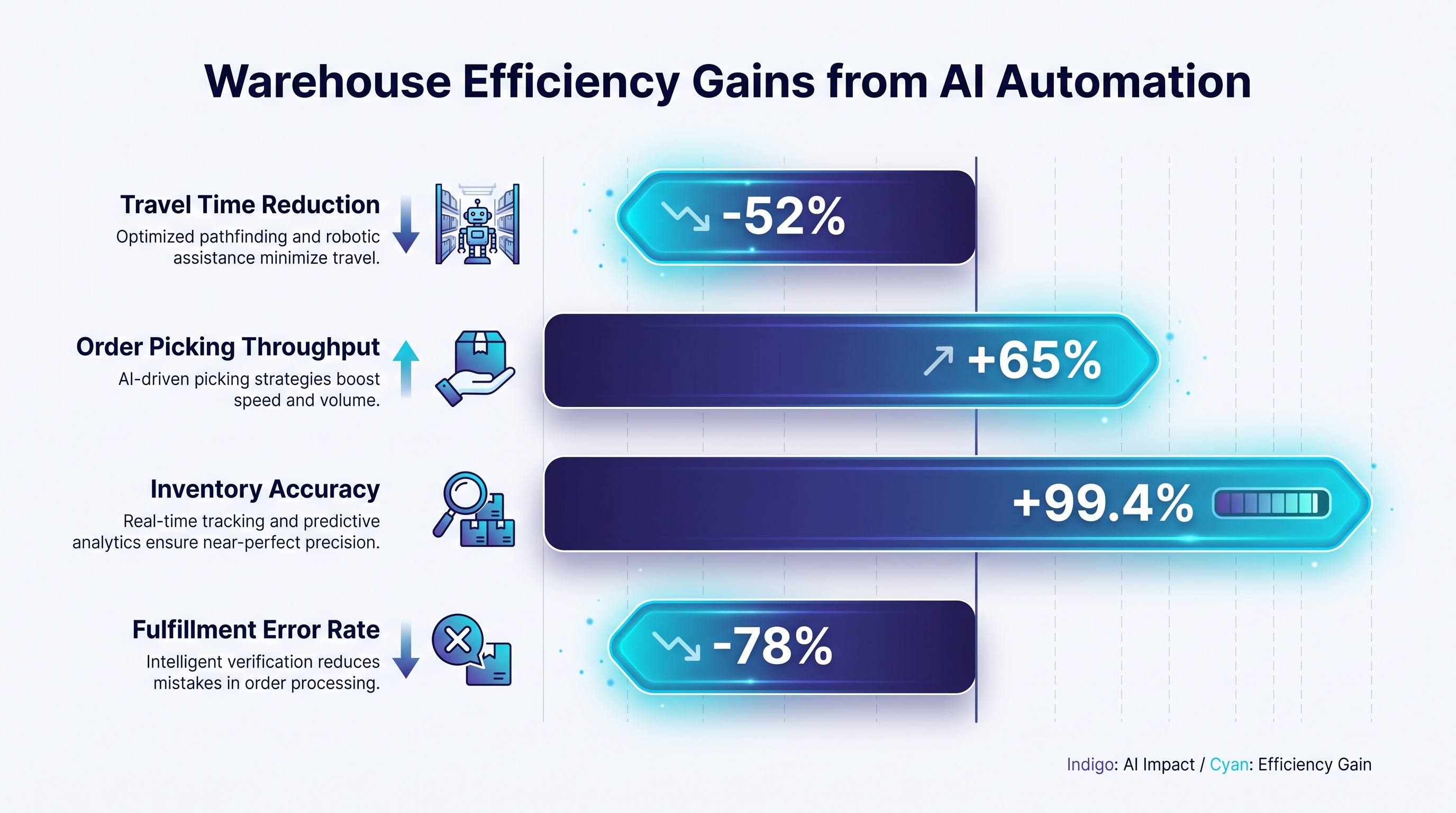
3PL and in-house logistics operations deploying AI warehouse optimization report:
- 50 percent improvement in pick path efficiency through dynamic slotting and batch optimization.
- 32 percent reduction in labor cost per unit picked without headcount reduction.
- 28 percent throughput capacity increase from existing physical infrastructure.
- 18 percent reduction in mis-picks and damage claims through improved ergonomic slotting.
- $3.2M average annual labor savings for a 200,000 sq ft centre processing 40,000 order lines daily.
Implementation Roadmap
Phase 1 (Weeks 1-4): Integrate WMS and order management data. Deploy SKU velocity analytics.
Phase 2 (Weeks 5-10): Activate order batching optimization and wave release timing integration.
Phase 3 (Weeks 11-18): Deploy AMR/human orchestration layer. Enable predictive replenishment triggers.
This article was written with AI assistance. | La redaction de cet article a ete assistee par IA.