Gestion de la Performance des Fournisseurs IA : Reduire les Risques de 44%
Par Delos Intelligence — 2026-08-13
68% des entreprises gerent encore la performance des fournisseurs dans des tableurs. L'IA reduit les risques d'approvisionnement de 44%.
Why 68% of Enterprises Still Manage Vendors in Spreadsheets
Vendor performance management is one of those functions that everyone agrees is critical and nobody enjoys doing. The typical process involves quarterly scorecards compiled manually from data scattered across ERP systems, email threads, and supplier portals. By the time the scorecard is complete, the information is three months old.
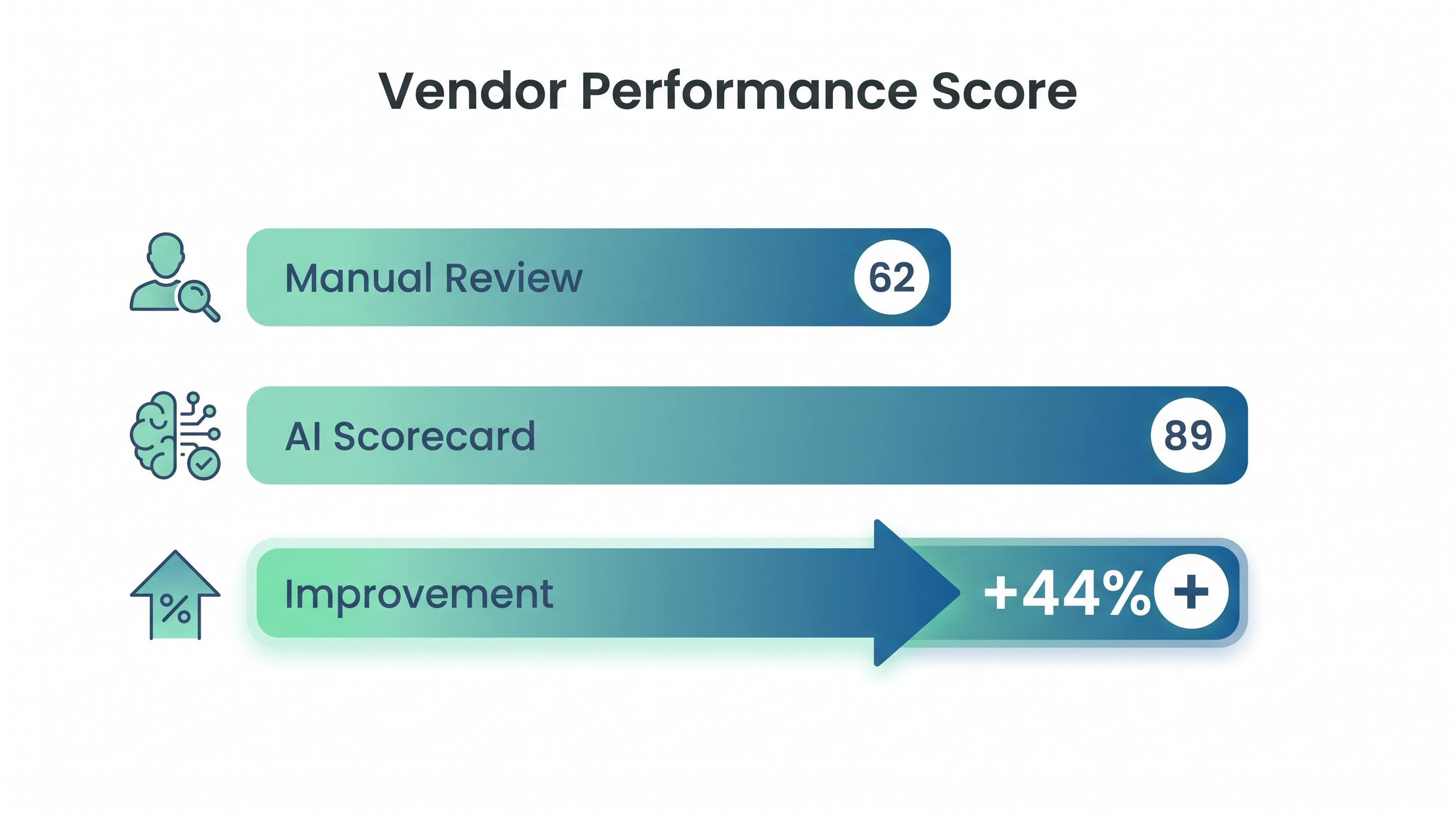
A 2025 Deloitte survey found that enterprises with manual vendor management processes experienced 44% more supply disruptions than those using AI-driven monitoring, $2.3M average annual loss from vendor-related quality issues, and 67% of procurement teams spending more than 30% of their time on data collection rather than strategic work.
!Vendor Performance Comparison
How AI-Powered Vendor Performance Management Works
Automated Data Aggregation
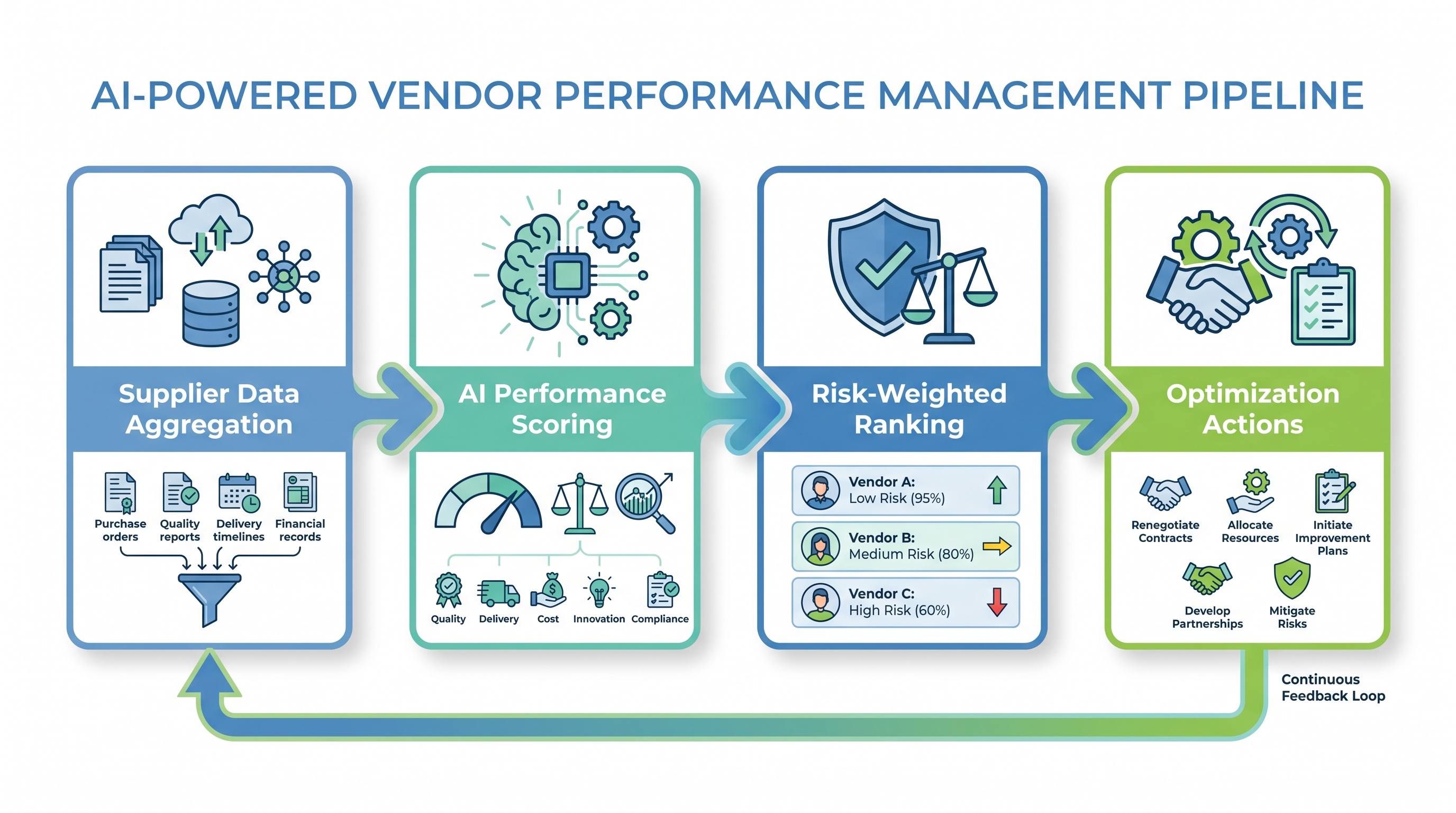
AI systems pull performance data from ERP and procurement systems (purchase order fulfillment rates, delivery times), quality management systems (defect rates, return rates), contract management platforms (SLA compliance), external data sources (financial health indicators, ESG ratings), and communication channels (email sentiment, response times).
AI Performance Scoring Engine
The scoring engine combines inputs into a multi-dimensional performance score covering: reliability score, quality score, cost score, risk score, innovation score, and sustainability score.
Predictive Risk Analytics
Beyond scoring current performance, AI models predict future risks: financial distress prediction 6-12 months in advance, disruption probability based on historical patterns, and capacity constraints based on order volume trends.
5 Enterprise Use Cases
1. Real-Time Supplier Scorecards
A manufacturing enterprise replaced quarterly manual scorecards with AI-driven real-time dashboards. Procurement managers see supplier performance updated daily, with automated alerts when scores drop below threshold. The procurement team reclaimed 120 hours per quarter previously spent on scorecard compilation.
2. Predictive Supplier Risk Alerts
A pharmaceutical company implemented AI models that flagged a critical API supplier 8 months before they filed for bankruptcy, giving the company time to qualify an alternative source and avoid a production halt that would have cost $45M.
3. Supplier Consolidation Optimization
An automotive manufacturer used AI to analyze 2,400 suppliers and identified 340 that could be consolidated without increasing risk. The consolidation saved $18M annually while reducing average lead times by 22%.
4. Automated Supplier Onboarding Assessment
A technology company automated supplier onboarding assessment, scoring new suppliers across 60+ criteria within 48 hours of registration compared to the previous 3-week manual process.
5. Sustainability and ESG Monitoring
A consumer goods enterprise integrated ESG data feeds into their vendor performance system, reducing supply chain emissions by 31% and avoiding two potential compliance violations.
Implementation Framework
Step 1: Data Integration (Weeks 1-6)
Connect ERP, procurement, quality, and contract management systems. Establish data pipelines for external sources.
Step 2: Model Development (Weeks 7-12)
Build performance scoring models calibrated to industry benchmarks. Train predictive risk models on historical supplier data.
Step 3: Dashboard and Alerting (Weeks 13-16)
Build role-based dashboards for procurement, quality, and finance teams. Configure automated alerts for score drops and risk predictions.
Step 4: Supplier Adoption (Weeks 17-20)
Share performance dashboards with key suppliers. Establish quarterly business reviews driven by AI insights.
Metrics That Matter
- Vendor performance score improvement: target +20% within 12 months
- Supply disruption reduction: target -40% within 18 months
- Time to detect supplier issues: target reduction from 90 days to 7 days
- Procurement team time on strategic work: target increase from 33% to 60%
The Bottom Line
AI-powered vendor performance management transforms supplier management from a reactive, backward-looking exercise into a proactive, predictive capability. Enterprises see 40-44% reductions in supply disruptions and 20% improvements in supplier performance scores.
This article was written with AI assistance.