AI-Powered Supplier Diversity: How Enterprises Build Inclusive Supply Chains and Boost Innovation by 35%
Par Delos Intelligence — 2026-08-12
Most enterprises believe their procurement decisions are objective. Yet unconscious bias in supplier selection shuts out diverse suppliers who could drive innovation and savings. AI removes that bias.
The Hidden Cost of Bias in Traditional Procurement
Most enterprises believe their procurement decisions are objective. The data says otherwise. Unconscious bias in supplier selection, favoring familiar companies, established networks, and similar founders, costs enterprises an estimated 15% in procurement efficiency and shuts out a diverse pool of suppliers who could drive innovation, improve pricing, and strengthen supply chain resilience.
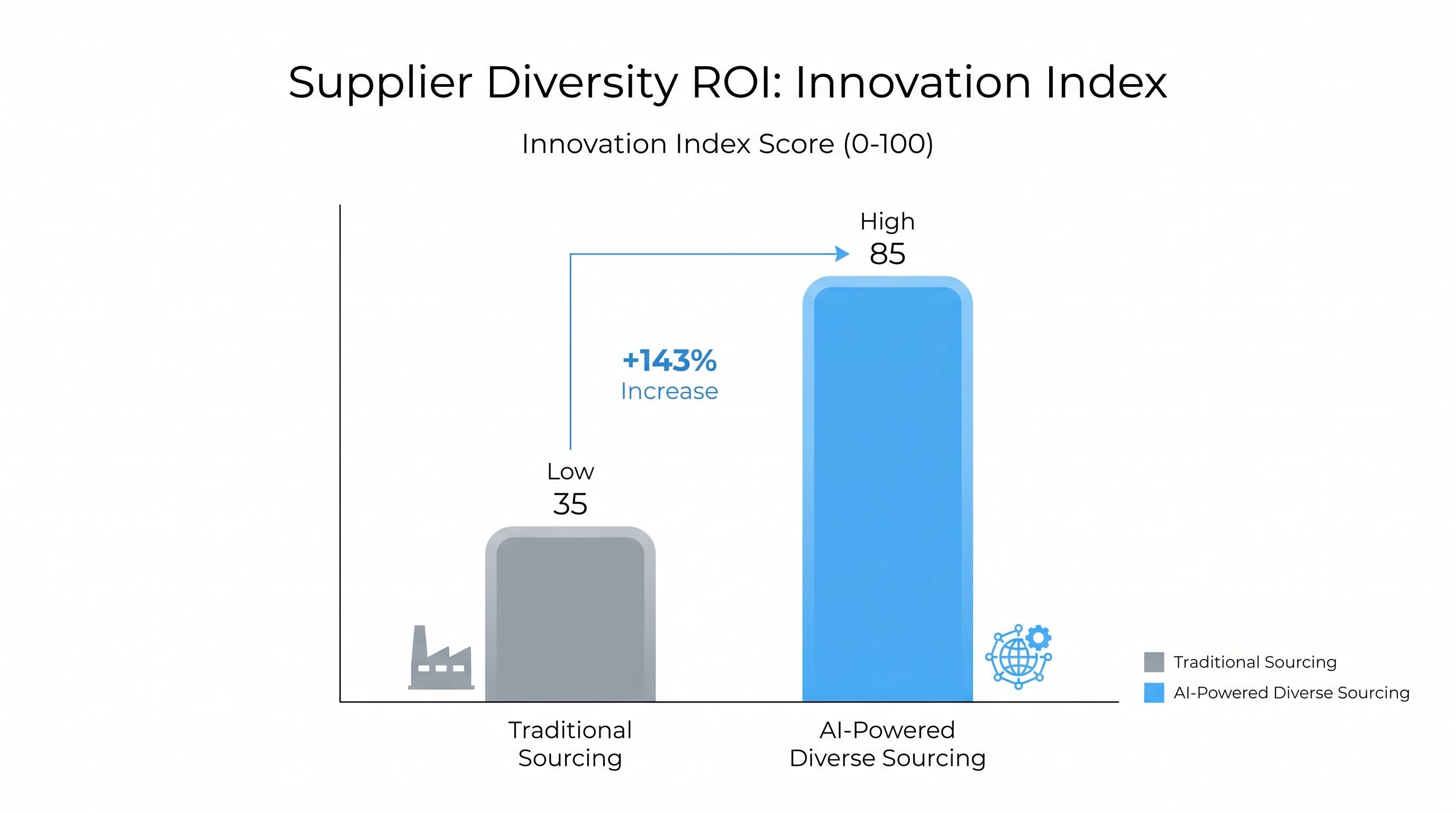
According to McKinsey, companies with diverse supplier bases are 35% more likely to outperform peers on innovation metrics. Yet only 23% of enterprises track supplier diversity metrics at all, and fewer than 10% have programs that systematically measure progress.
How AI Transforms Supplier Diversity Programs
Bias-Free Supplier Discovery
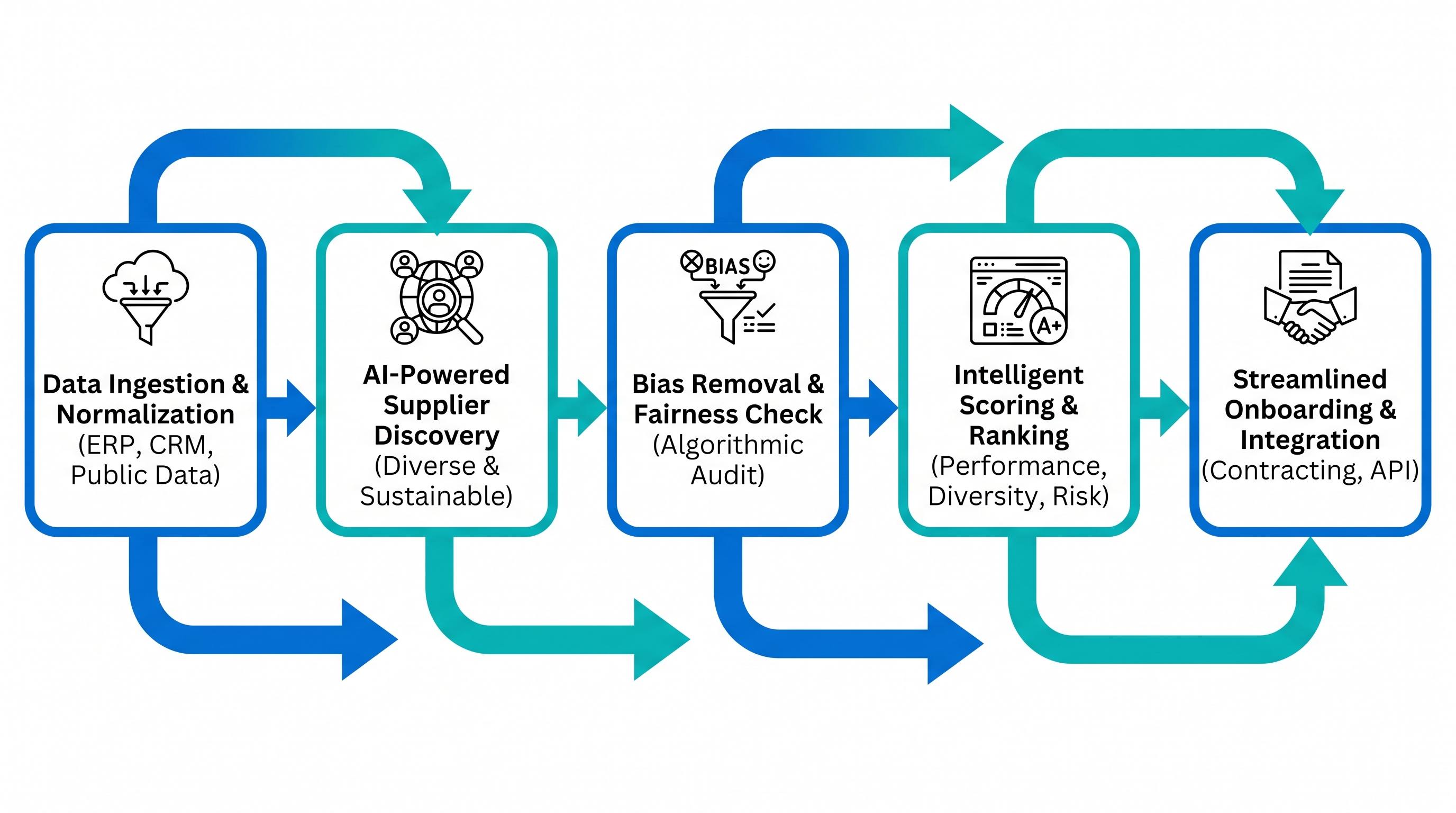
Traditional sourcing relies on procurement teams searching databases and networks they already know. AI-powered platforms crawl certified diverse supplier registries (WBENC, NMSDC, NVBDC), open business databases, and trade associations to surface qualified suppliers that manual searches would miss.
The key differentiator: AI ranks suppliers on objective criteria, capability, capacity, certification status, financial stability, and performance history, not on personal familiarity or referral networks that perpetuate existing biases.
!Diverse Supplier Performance vs Mainstream Suppliers
Automated Certification Verification
Managing diverse supplier certifications manually is a compliance nightmare. Certifications expire, standards change, and organizations cannot verify hundreds of suppliers by hand. AI systems connect to certification bodies in real time, automatically verifying and tracking certification status across all registered diverse suppliers.
This eliminates two major risks: accidentally purchasing from suppliers whose certifications have lapsed, and failing regulatory audits because diversity spend tracking was incomplete.
Spend Analytics and Compliance Reporting
AI aggregates spend data across every procurement channel, direct, indirect, and sub-tier, to produce accurate diverse spend reports. For enterprises subject to government contract requirements, this automated reporting is the difference between compliance and disqualification.
!AI Supplier Diversity Program Workflow
Performance-Based Supplier Development
AI identifies high-potential diverse suppliers who are close to enterprise qualification thresholds and recommends targeted development interventions: capacity-building programs, mentorship pairings with Tier-1 suppliers, and pilot contract opportunities. This converts the diversity program from a checkbox exercise into a genuine supply chain development initiative.
The Business Case for Diverse Suppliers
The ROI is compelling and well-documented:
- 35% higher innovation output from teams working with diverse suppliers (McKinsey, 2024)
- 20% average cost savings through increased competition in supplier pools
- 15% improvement in supply chain resilience from reduced geographic and demographic concentration
- Government contract eligibility: federal contracts increasingly require documented diverse supplier spend
- Brand and ESG value: institutional investors increasingly score supplier diversity in ESG assessments
A Fortune 500 technology company expanded its diverse supplier program using AI-driven discovery. Within 18 months, diverse supplier spend grew from 8% to 19% of total procurement, and the expanded supplier pool delivered $12M in competitive savings through increased bidding competition.
Implementation Roadmap
Phase 1: Baseline and Discovery (Weeks 1-4)
Audit current diverse spend. Identify gaps against industry benchmarks. Deploy AI supplier discovery to build a qualified pipeline of certified diverse suppliers.
Phase 2: Program Integration (Weeks 5-10)
Integrate AI supplier scoring into existing procurement workflows. Train procurement teams on bias-aware sourcing practices. Establish automated certification tracking.
Phase 3: Measurement and Scaling (Weeks 11-20)
Implement real-time diverse spend dashboards. Launch supplier development tracks for high-potential diverse suppliers. Set public targets aligned with customer and investor expectations.
Conclusion
AI-powered supplier diversity is not a corporate social responsibility program. It is a procurement intelligence capability that improves supplier quality, drives innovation, and builds supply chain resilience. Enterprises that leverage AI to remove bias from sourcing and systematically develop diverse supplier relationships will outperform peers on both financial and ESG metrics. The data is clear: diversity in the supply chain is a competitive advantage, and AI makes it achievable at scale.
Related: AI-Powered Procurement | AI Supply Chain Optimization
External: McKinsey on Supplier Diversity | Harvard Business Review on Inclusive Procurement